

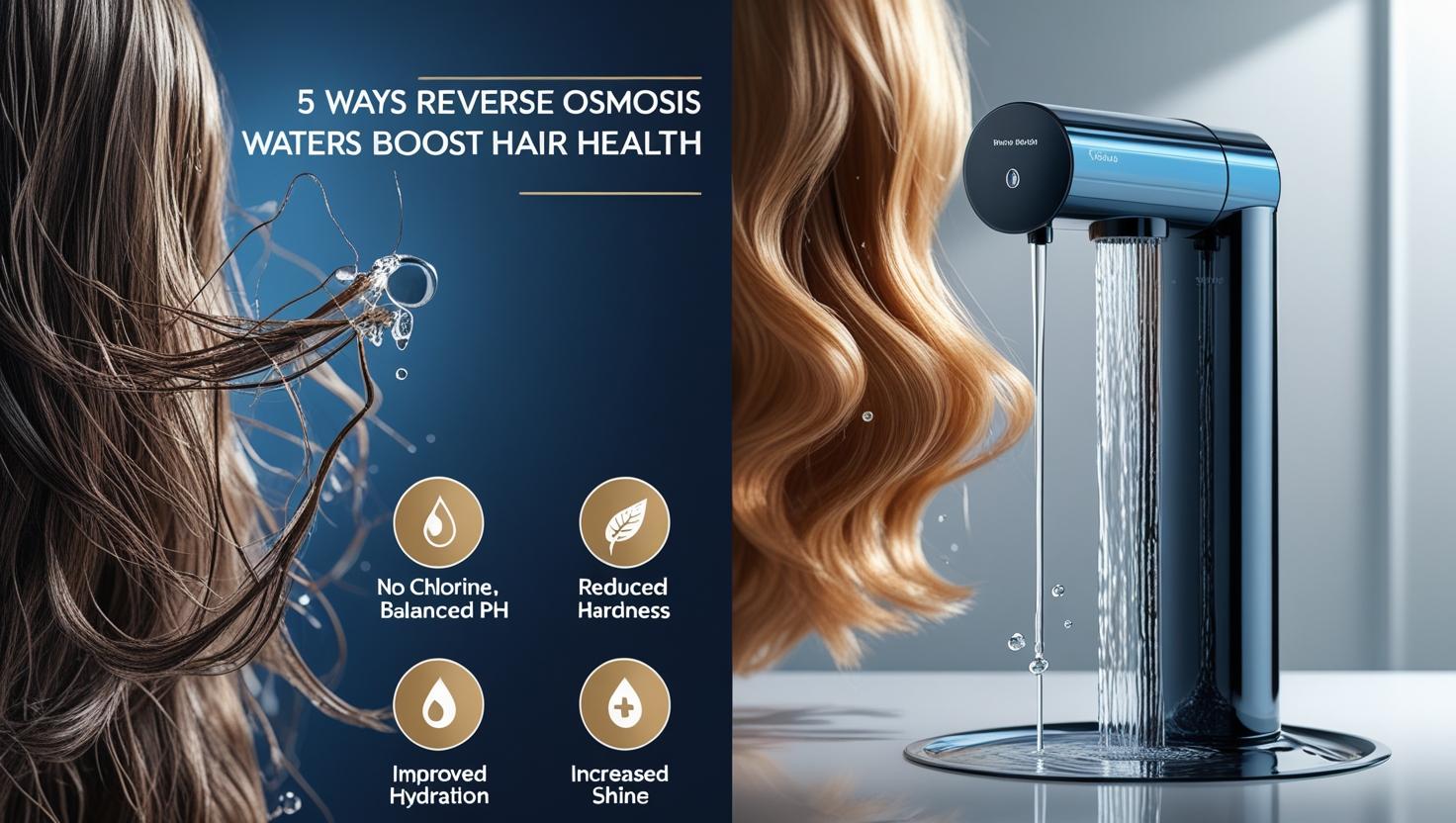
Maintaining healthy, vibrant hair starts with what we put into our bodies. While many focus on external treatments, the quality of water we consume plays a pivotal role in our overall well-being—including the strength, shine, and longevity of our hair. Reverse osmosis water, known for its purity, is free of impurities, chemicals, and heavy metals that could damage our health and hair over time.
Here, we explore the five powerful ways reverse osmosis (RO) water promotes healthier hair, offering compelling reasons to make it a permanent part of your wellness routine.
-
Eliminates Harmful Contaminants That Damage Hair
Tap water often contains a mixture of chlorine, fluoride, heavy metals, and volatile organic compounds (VOCs). These substances not only pose health risks but can also affect hair follicles and scalp health when consumed or used in hair care.
By using a reverse osmosis water system, we can ensure that over 99% of impurities are removed, including:
- Lead and mercury – linked to hair thinning and scalp irritation
- Chlorine – which strips the natural oils from the scalp
- Fluoride – which may disrupt hormonal balance affecting hair growth
By drinking RO-purified water, we minimize the toxic burden on the body, giving our hair follicles an optimal environment to thrive and regenerate.
-
Improves Hydration for Stronger Hair Growth
Hair growth begins at the root, which is deeply connected to the circulatory system and the water we consume. Reverse osmosis water, being ultra-pure, supports better cellular hydration, enabling nutrients to be absorbed more efficiently.
When our bodies are properly hydrated:
- Hair shafts remain supple, reducing breakage
- Scalp tissues retain moisture, preventing dryness or flaking
- Sebaceous glands regulate oil production, balancing scalp health
Unlike mineral-heavy water, RO water contains no excess salts that burden the kidneys or reduce hydration efficiency. This enables nutrients like biotin, zinc, and vitamin E to be delivered effectively to hair follicles, supporting consistent growth cycles.
Read: Top 10 Contaminants Removed by Reverse Osmosis Water Filters
-
Prevents Mineral Build-Up That Causes Brittle Hair
Many individuals unknowingly suffer from mineral overload, especially from hard water that contains calcium and magnesium. These minerals deposit onto the scalp and hair shaft over time, creating a layer that blocks moisture absorption, making hair feel:
- Rough
- Unmanageable
- More prone to split ends
By switching to reverse osmosis filtered water for drinking and even rinsing, we reduce mineral exposure drastically. This change can prevent:
- Scalp scaling and dandruff
- Hair cuticle damage
- Color fading in dyed hair
Using RO water for hair care routines results in noticeably softer, shinier, and smoother hair that responds better to conditioners and treatments.
-
Promotes Hormonal Balance Linked to Hair Retention
Unfiltered water often contains endocrine-disrupting chemicals (EDCs)—like pesticide residues, pharmaceutical traces, and microplastics—that can interfere with the body’s hormonal signals.
Hormonal imbalance, especially related to thyroid dysfunction or androgen excess, has been closely tied to hair thinning, alopecia, and excessive shedding.
Reverse osmosis technology is uniquely capable of removing:
- Synthetic estrogens
- Prescription drug residues
- Herbicides like glyphosate
By drinking pure reverse osmosis water, we support the endocrine system and reduce the internal stressors that contribute to hormone-related hair loss.
Read: The Most Effective Way to Eliminate PFAS and PFOA from Your Drinking Water
-
Enhances Detoxification to Support Hair Follicle Vitality
A healthy scalp starts with a healthy body. Detoxification is critical for cellular repair and regeneration—including hair-producing cells. Toxins in unfiltered water can overload the liver, kidneys, and lymphatic system, hampering detox pathways.
Reverse osmosis water:
- Assists the body in flushing out metabolic waste
- Reduces toxic load on the liver and kidneys
- Supports lymphatic drainage, helping with inflammation
This improved internal cleansing enables the body to direct more energy and nutrients to non-essential functions like hair and nail growth, enhancing both their speed and quality.
Why Reverse Osmosis Water Is Better Than Bottled or Tap Water
Many assume that bottled spring water or tap water treated with carbon filters is sufficient. However, most of these methods only remove visible particles and bad odors, leaving behind dissolved solids, chemicals, and microscopic toxins.
Reverse osmosis systems use a semi-permeable membrane that:
- Filters particles down to 0.0001 microns
- Removes up to 99.9% of TDS (total dissolved solids)
- Provides water with an ultra-low contamination profile
This makes it the gold standard for those who prioritize internal health and external beauty—especially for hair care enthusiasts looking for natural ways to enhance hair quality.
Using Reverse Osmosis Water in Your Daily Hair Routine
For optimal results, we recommend incorporating RO water into your hair care regimen as follows:
- Drinking 2–3 liters of RO water daily to stay fully hydrated
- Using RO water as a final rinse after shampooing and conditioning
- Mixing RO water with essential oils (like rosemary or peppermint) for scalp tonics
- Using RO water in DIY hair masks for cleaner application and faster absorption
This approach can detoxify your scalp, improve nutrient delivery, and restore your hair’s natural shine and bounce over time.
Read: 8 Benefits of Installing a Home Water Filtration System
Conclusion: The Hair Benefits of Reverse Osmosis Water Are Clear
When we consider the factors influencing hair health, water purity is often overlooked. Yet, it may be the simplest and most effective change we can make. Reverse osmosis water provides clean hydration that not only supports our overall wellness but also creates the ideal environment for hair follicles to thrive.
From preventing chemical damage to improving nutrient absorption and hydration, the benefits of RO water are undeniable. Whether you’re battling hair thinning, dryness, or just want to take your hair care routine to the next level—reverse osmosis water offers a powerful, natural solution.
By making this one lifestyle change, we empower our bodies and our hair to function at their absolute best—from the inside out.
Is Reverse Osmosis Water Healthy for Hair?
Is reverse osmosis water healthy? Yes — RO water is widely considered the best water for both drinking and hair care. The RO system uses a semipermeable membrane to remove up to 99% of dissolved solids, salts, and contaminants. For hair health, what matters most is what is not in the water: no chlorine, no sodium, no heavy metals, and very low total dissolved solids (TDS).
Borewell Water vs. RO Water for Hair
Many people ask: is bore water good for hair? The short answer is no — borewell water often contains high levels of dissolved minerals, iron, and sometimes fluoride. Hard borewell water can make hair brittle, dry, and prone to breakage over time. If you wash your hair with borewell water, you may notice build-up, dullness, and increased hair fall. Switching to filtered RO water dramatically improves hair texture and shine.
Does Reverse Osmosis Remove Salt?
Does reverse osmosis remove salt? Yes. The RO membrane is specifically designed to block sodium and other dissolved ions. This is one of the key reasons RO water is better for hair than tap water or borewell water — low sodium levels in wash water means less mineral build-up on the hair shaft, resulting in softer, cleaner hair.
Is Well Water Safe to Drink and Use on Hair?
Is well water safe to drink? Untreated well water can contain bacteria, nitrates, arsenic, iron, and other contaminants depending on local geology. While well water quality varies widely, it is generally not ideal for hair health without treatment. An RO system — or RO system combined with a water softener — is the most effective solution for treating both well water and borewell water to safe, hair-friendly quality.
Why Is Reverse Osmosis Water Good for You?
Why is reverse osmosis water good for you? RO water provides several health and lifestyle benefits:
- Safe to drink: removes bacteria, viruses, heavy metals, chlorine, and dissolved solids
- Better for hair: no chlorine or minerals to strip natural oils when you wash your hair
- Healthier skin: reduces exposure to chloramines and other skin irritants
- Pure taste: RO filters outperform bottled water in blind taste tests
- Pros and cons: The main consideration is that RO also removes beneficial minerals — adding a remineralization filter restores calcium and magnesium
Best Reverse Osmosis Water Filter for Hair Health
The best reverse osmosis water filter for hair health is a whole-house RO system or an under-sink RO system with a remineralization stage. This gives you consistently pure water quality at every tap — perfect for drinking and washing hair. AMPAC USA’s residential RO systems use high-rejection RO membranes and multi-stage RO filters for long-lasting performance. Water is safe, pure, and far superior to borewell, well water, or unfiltered tap water.
Is Reverse Osmosis Water Healthy for Hair?
Is reverse osmosis water healthy for hair and skin? Yes — reverse osmosis ro system water removes chlorine, fluoride, dissolved salts, and sodium levels that can strip and damage hair. The result is soft, mineral-free water ideal for washing — it lathers better, rinses cleaner, and leaves hair healthier. Wash your hair with RO water and you eliminate the hard water minerals that cause dullness and breakage.
Does Reverse Osmosis Remove Salt? Is Bore Water Good for Hair?
Does reverse osmosis remove salt? Yes — a high-rejection ro system removes sodium, chlorides, and other dissolved salts through its semipermeable membrane. This matters especially if your source is a borewell or well. Is bore water good for hair? Generally no — bore water is high in dissolved solids, minerals, and potential contaminants. Running it through the best reverse osmosis water filter transforms it into pure, safe to drink water that is also excellent for hair care.
Is Well Water Safe to Drink? Why Is Reverse Osmosis Water Good for You?
Is well water safe to drink without treatment? It depends on your source — many wells contain bacteria, heavy metals, nitrates, and elevated sodium levels. RO treatment resolves these concerns. Why is reverse osmosis water good for you? RO-filtered drinking water has excellent water quality — removing up to 99% of contaminants while being free of the chemicals added to municipal supplies. The pros and cons of RO water are well documented: it removes harmful impurities (a major pro) and can reduce trace minerals (manage with a remineralizing filter). Compared to bottled water, RO is more cost-effective and eco-friendly. Our ro filters ensure water is safe for drinking, cooking, and hair care. Contact AMPAC USA to find the best reverse osmosis water filter for your home.
Is Reverse Osmosis Water Healthy? A Complete Guide for Hair and Drinking
Is reverse osmosis water healthy to drink and use on your hair? Yes — and the science backs it up. Why is reverse osmosis water good for you? Because a reverse osmosis ro system uses a semipermeable membrane to remove over 99% of contaminants including chlorine, heavy metals, fluoride, and dissolved solids from tap or borewell water. This makes RO water far safer and purer than untreated well water.
Is bore water good for hair? Raw borewell water often contains high sodium levels, minerals, and chemicals that dry out hair and cause damage. Does reverse osmosis remove salt and these harmful minerals? Yes — a quality ro system removes salt, hardness minerals, and chlorine, making the water gentler when you wash your hair. Unlike a water softener (which adds sodium), RO produces truly pure water. Is well water safe to drink without treatment? Not always — RO filtration makes well and bore water water is safe and safe to drink. Problems with reverse osmosis water: the main pros and cons include excellent purity on the plus side, with some water wasted during the reverse osmosis process. AMPAC USA ro filters minimize waste ratios while maintaining water quality. Choose from our wide range of best reverse osmosis water filter systems for home and commercial use — all designed to deliver high-water quality drinking water free of contaminants.

![Reverse Osmosis Membrane Lifespan: How Long Do RO Membranes Last? [Maintenance Guide]](https://www.ampac1.com/blog/wp-content/uploads/2026/03/membrane-lifespan-150x150.png)


![TDS Levels in Drinking Water: What They Mean and Why They Matter [Complete Guide]](https://www.ampac1.com/blog/wp-content/uploads/2026/03/tds-levels-150x150.png)