

When you use reverse osmosis (RO) water-filtration-systems-which-can-give-your-home-clean-clear-water/”>water filtration, you’re removing up to 99% of dissolved contaminants from your tap water. That includes lead, nitrates, chlorine, and fluoride. It’s one of the best ways to purify your home’s water.
How Reverse Osmosis Makes Your Home’s Water Healthier
A standard point-of-use (POU) reverse osmosis system works by pushing tap water through a special membrane. This membrane has tiny pores, just 0.0001 microns wide, which is about 500,000 times smaller than a human hair. This physical barrier stops dissolved salts, heavy metals, bacteria, viruses, cysts, and many industrial chemicals. These bad guys would otherwise sail right through regular carbon block filters.
Stage-by-stage filtration: Most home RO units have 4 to 6 stages. First, water goes through a sediment pre-filter. This catches particles and protects the membrane. Then, a carbon block filter reduces chlorine and volatile organic compounds (VOCs) that could hurt the membrane’s performance. The RO membrane itself does the heavy lifting, blocking lead, arsenic, nitrates, chromium, fluoride, and PFAS compounds. Finally, a post-filter carbon stage polishes the water, getting rid of any lingering taste or odor before it reaches your faucet.
Contaminant rejection rates: EPA-certified RO membranes are really good at what they do. They typically reject 90-99% of lead (Pb), 88-95% of nitrates, 95-99% of arsenic, and 94-97% of chromium-6. That’s a huge step up from standard activated carbon or pitcher filters, which just don’t stand a chance against dissolved inorganic contaminants.
Health benefits in the home: If you’re on city water and your tests show high levels of lead or nitrates, or if you have a private well and worry about farm runoff, an RO system under your kitchen sink is a smart move. It gives you a constant supply of clean water for drinking and cooking. And it’s cheap, usually costing $0.01-$0.05 per gallon, way less than bottled water. Just remember to replace the membrane every 2-3 years, or as the manufacturer suggests, to keep it working well and prevent bacteria from growing inside.
Remineralization and taste: Because RO removes almost all dissolved minerals, many systems include a remineralization stage. This adds back beneficial calcium and magnesium, which makes the water taste better. It also restores a mild alkalinity (pH 7.0-7.5), which some people prefer over the slightly acidic pH of RO water without minerals.
Want a healthy home? It often starts with clean drinking water. Of course, you want the best for your family. People have used many methods for years to get purified water in their homes. Think activated carbon purification, candle filters, UV purification, ultrafiltration, and more. But one system really stands out for how well it works: Reverse Osmosis. Using reverse osmosis water filtration has made water purification more efficient than ever.
A typical RO system can remove up to 99% of unwanted particles from water. That’s serious efficiency, right? When you’re looking for a home water purifier, a Reverse Osmosis system is often the first thing people suggest. That shows how much trust users have in this purification system.
And there’s a good reason why RO systems are so popular. This purification technology has proven to be the most effective and affordable way to get pure drinking water for your home. Because it’s cost-effective, RO has brought world-class purification to many homes that otherwise wouldn’t have had quality water.
Why is it so effective?
Let’s see how it works. There’s a scientific explanation, but we’ll keep it simple. First, understand osmosis. That’s when a less salty solution naturally mixes with a saltier solution.
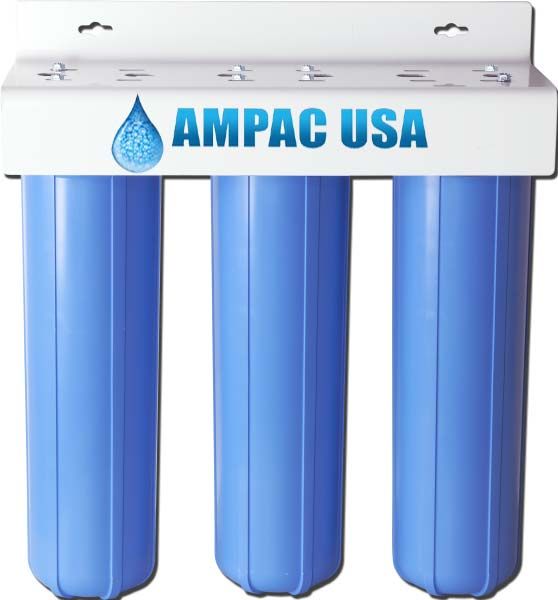
AMPAC USA engineers custom water purification systems for commercial, industrial, and emergency applications — from 500 GPD to multi-million GPD. Trusted by municipalities, military, and industry worldwide.