
- PMID: 33279831
- DOI: 10.1016/j.watres.2020.116674
Free article
Abstract
Capsid integrity (RT-)qPCR has recently been developed to discriminate between intact forms from inactivated forms of viruses, but its applicability to identifying integrity of viruses in drinking water has remained limited. In this study, we investigated the application of capsid integrity (RT-)qPCR using cis-dichlorodiammineplatinum (CDDP) with sodium deoxycholate (SD) pretreatment (SD-CDDP-(RT-)qPCR) to detect intact viruses in surface water and tap water. A total of 63 water samples (surface water, n = 20; tap water, n = 43) were collected in the Kanto region in Japan and quantified by conventional (RT)-qPCR and SD-CDDP-(RT-)qPCR for pepper mild mottle virus (PMMoV) and seven other viruses pathogenic to humans (Aichivirus (AiV), noroviruses of genotypes I and II, enterovirus, adenovirus type 40 and 41, and JC and BK polyomaviruses). In surface water, PMMoV (100%) was more frequently detected than other human pathogenic viruses (30%-60%), as determined by conventional (RT-)qPCR. SD-CDDP-(RT-)qPCR also revealed that intact PMMoV (95%) was more common than intact human pathogenic viruses (20%-45%). In the tap water samples, most of the target viruses were not detected by conventional (RT-)qPCR, except for PMMoV (9%) and AiV (5%). PMMoV remained positive (5%), whereas no AiV was detected when tested by SD-CDDP-(RT-)qPCR, indicating that some PMMoV had an intact capsid, whereas AiV had damaged capsids. The presence of AiV in the absence of PMMoV in tap water produced from groundwater may demonstrate the limitation of PMMoV as a viral indicator in groundwater. In addition to being abundant in surface water, PMMoV was detected in tap water, including PMMoV with intact capsids. Thus, the absence of intact PMMoV may be used to guarantee the viral safety of tap water produced from surface water.
Keywords: Capsid integrity (RT-)qPCR; drinking water; intact virus; viral indicator; virus occurrence.
The post Application of Capsid Integrity (RT-)qPCR to Assessing Occurrence of Intact Viruses in Surface Water and Tap Water in Japan appeared first on Facts About Water.
Source: Water Feed
Frequently Asked Questions
How quickly can an emergency water purification unit be deployed?
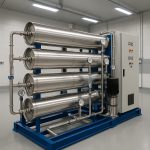
AMPAC USA's EPRO and mobile RO units can be operational within 30–60 minutes of arrival on-site. Trailer-mounted and skid-mounted systems are pre-plumbed and pre-wired, requiring only connection to a power source and water source. Units treat river water, lake water, or brackish groundwater.
What flow rates are available for emergency water treatment?
AMPAC USA's emergency systems range from 1,500 GPD portable units to 50,000+ GPD trailer-mounted systems. Military-specification units are available for forward operating base deployment, producing potable water meeting EPA and WHO drinking water standards from virtually any source.
Are emergency RO systems suitable for disaster relief operations?
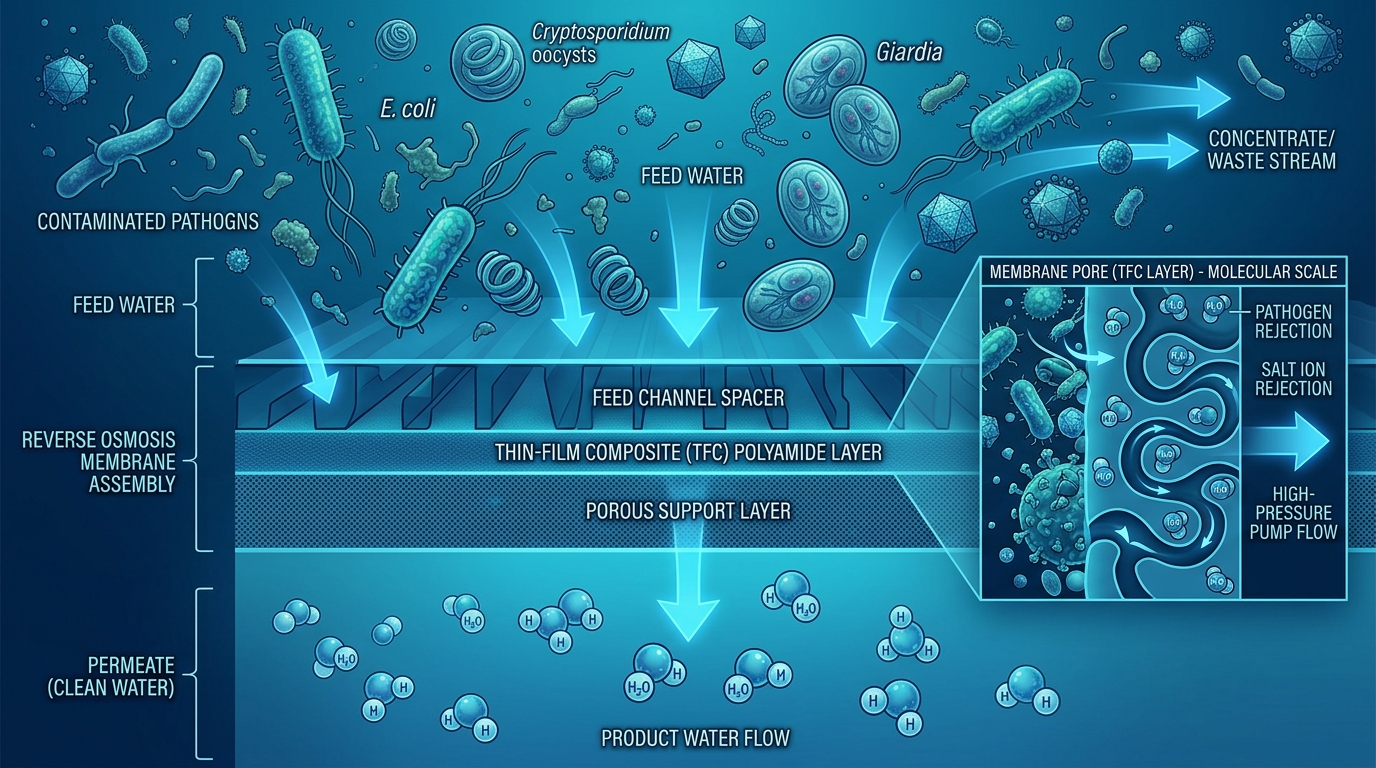
Yes. AMPAC USA's emergency systems are used by FEMA, the U.S. military, and international NGOs for disaster relief. They treat flood water, contaminated groundwater, and brackish sources, removing bacteria, viruses, and chemical contaminants to produce safe drinking water on-site.
What power sources can emergency water purification systems use?
AMPAC USA's emergency systems can run on generator power (120/240V or 480V 3-phase), solar panels with battery backup, or vehicle power take-off (PTO). Low-power models consume as little as 0.5 kW, making them viable for off-grid deployment.
How durable are military-grade water purification systems?
AMPAC USA's military systems are built to MIL-SPEC standards with stainless steel frames, powder-coated components, and UV-resistant materials. They are designed to operate in temperatures from -20°F to 120°F and are vibration-tested for transport in military vehicles.
Related Articles
- Assessing the origin of bacteria in tap water and distribution system in an unchlorinated drinking water system by SourceTracker using microbial community fingerprints
- Factors Related to Water Filter Use for Drinking Tap Water at Home and Its Association With Consuming Plain Water and Sugar-Sweetened Beverages Among U.S. Adults
- Unravelling the composition of tap and mineral water microbiota: Divergences between next-generation sequencing techniques and culture-based methods
- Assessing the threats of organophosphate esters (flame retardants and plasticizers) to drinking water safety based on USEPA oral reference dose (RfD) and oral cancer slope factor (SFO)
Conclusion
This post highlighted how emergency and military-grade water purification systems provide safe drinking water rapidly in the most challenging field conditions. For organizations requiring deployable water treatment capability, AMPAC USA engineers portable and trailer-mounted systems built to perform wherever they are needed. Contact our team at info@ampac1.com or (909) 548-4900 to discuss your emergency water treatment requirements.
AMPAC USA engineers custom water purification systems for commercial, industrial, and emergency applications — from 500 GPD to multi-million GPD. Trusted by municipalities, military, and industry worldwide.