
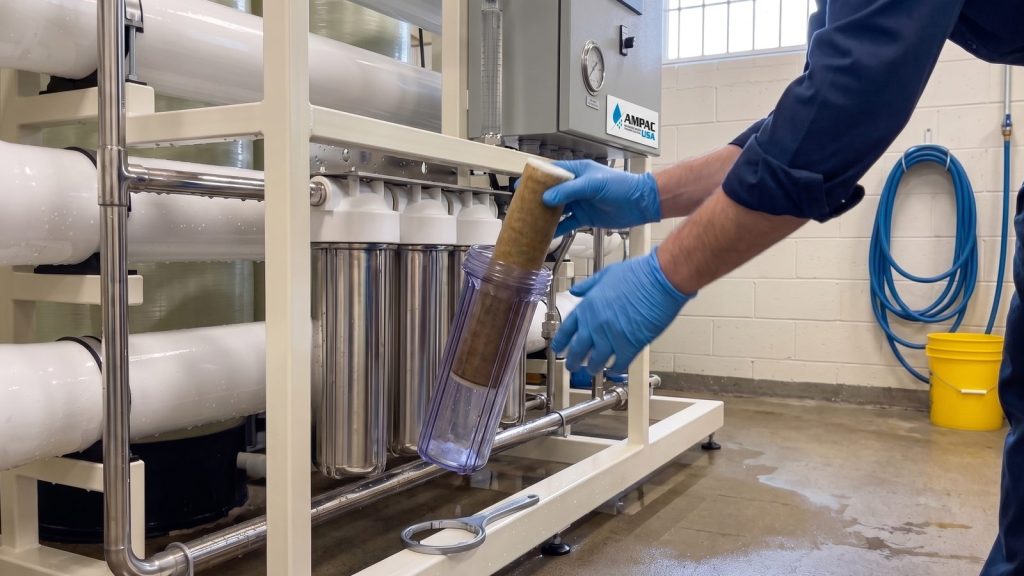
RO System Troubleshooting: 12 Common Problems and How to Fix Them
Quick Answer: Most RO system failures trace to one of four root causes: fouled membranes, inadequate feed pressure, worn pre-filtration,

Expert insights on water treatment, reverse osmosis, and purification systems
Quick Answer: Most RO system failures trace to one of four root causes: fouled membranes, inadequate feed pressure, worn pre-filtration,
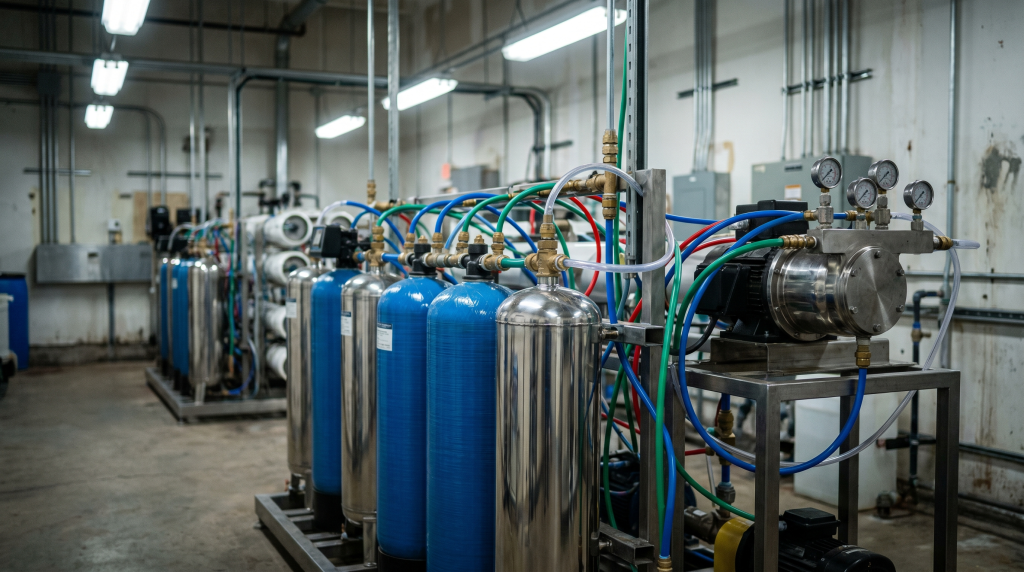
Quick Answer: RO water quality is measured by four parameters: TDS (total dissolved solids, target <50 ppm for most commercial
NSF/ANSI 58 is the certification standard for point-of-use reverse osmosis systems intended for drinking water. If a supplier tells you
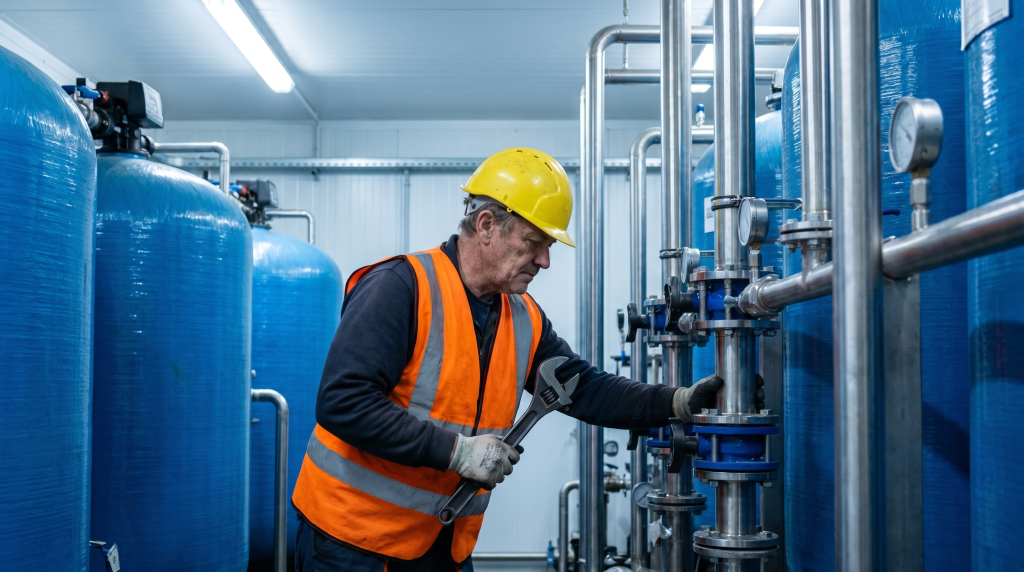
A reverse osmosis system running past its service intervals doesn’t fail dramatically — it just slowly stops working. Flux drops.
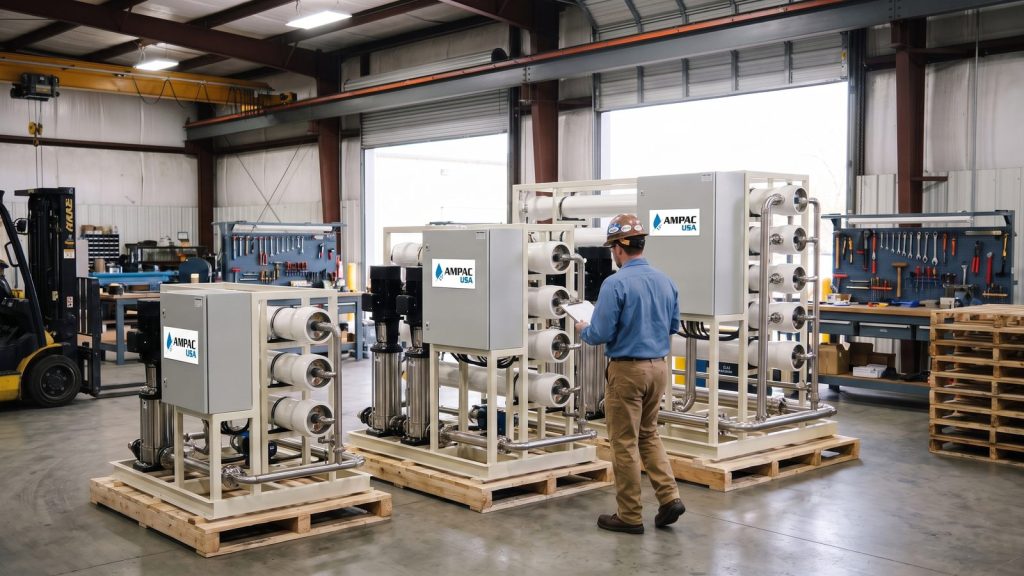
Technical specifications for AMPAC USA commercial reverse osmosis systems — complete system specs, membrane counts, pump ratings, dimensions, and operating
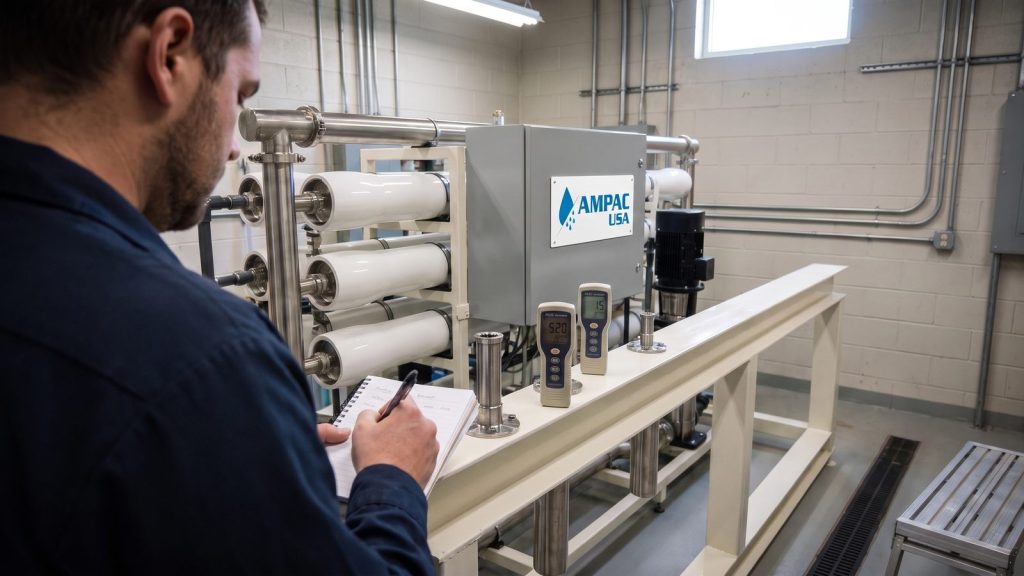
Rejection rate is the number that tells you whether your RO membrane is actually working. It measures what percentage of
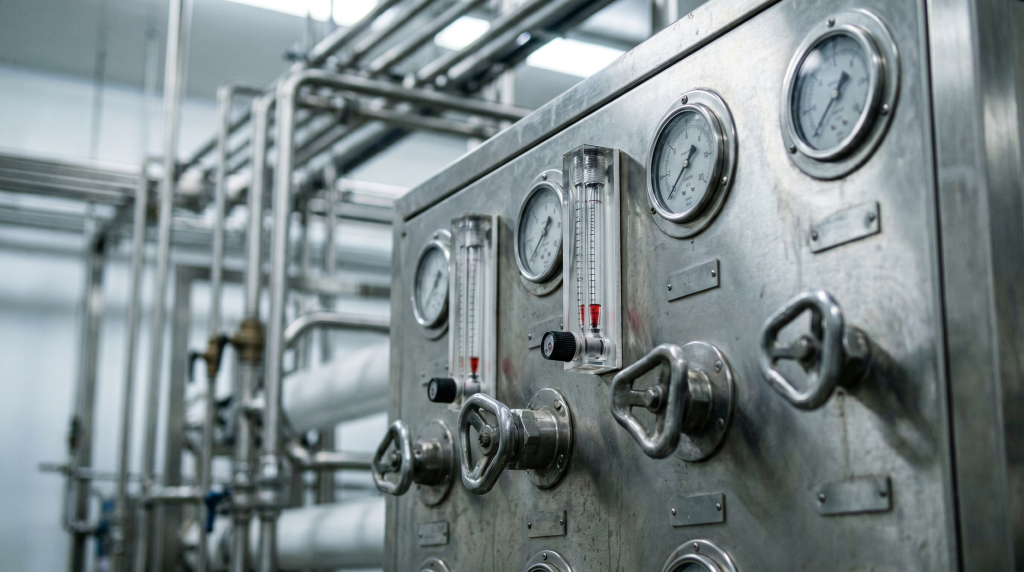
Recovery rate is one of the most consequential design parameters in an RO system — and one of the least
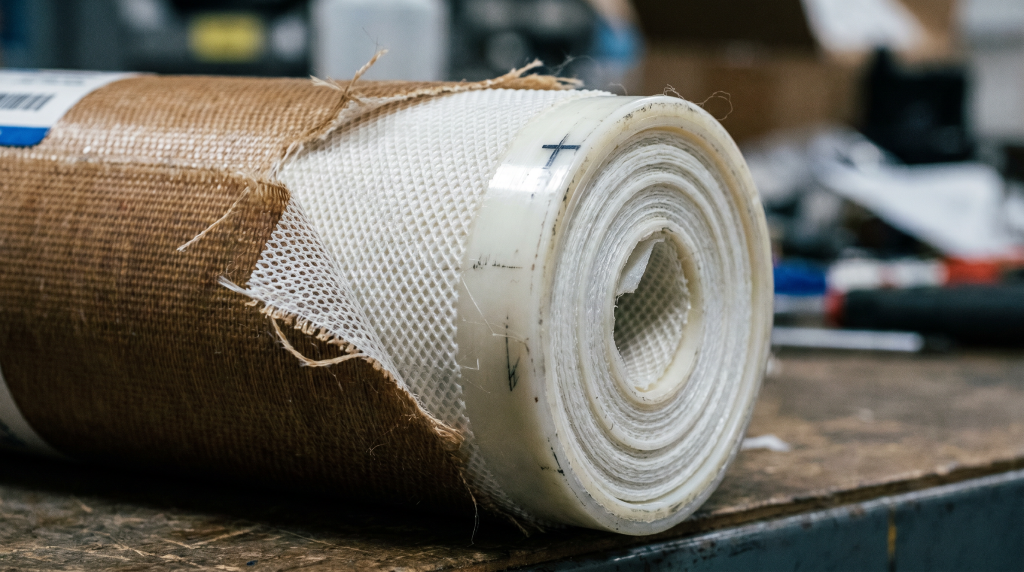
Not all RO membranes are interchangeable. The membrane is the core of an RO system, and selecting the right one
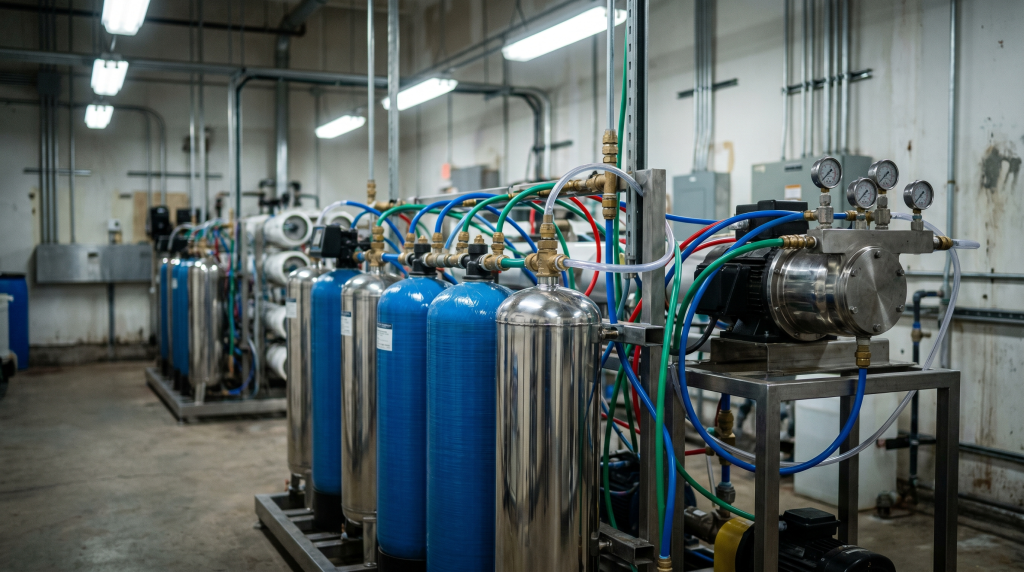
Reverse osmosis sounds complicated. The underlying principle isn’t. Water is pushed through a membrane so fine it passes water molecules
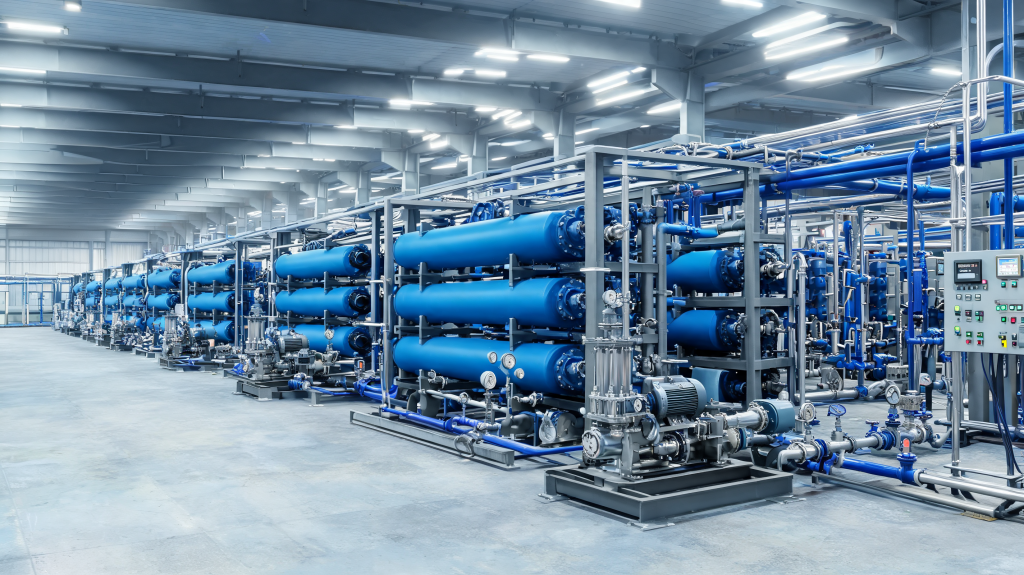
At 150 psi on the low end and 1,200 psi on the high, industrial reverse osmosis doesn’t mess around. These