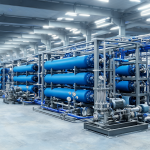

We don’t know much about how seawater desalination negatively affects the ecosystem around it. This method has been a huge help, giving fresh water to millions every day. It’s a smart move, especially with our freshwater supplies shrinking. But, over the last 10 to 15 years, as these plants popped up on the coasts of Israel, Australia, and the US, only a few reports have really looked at the potential threat to marine life. Plants and animals living underwater, especially close to these facilities, are most at risk from “brine poisoning” – that’s the concentrated, rejected water. This article digs into whether this situation could harm the environment, mainly through what scientists in the field have learned.
Know More:
Today, coastal areas widely use reverse osmosis for seawater desalination. Many big cities sit right by the water, often near the coast. So, it makes sense that people there get their drinking water from desalinated seawater. For years, scientists have argued about whether constantly taking seawater and turning it fresh affects the animals and plants living in it. Some say a little pollution won’t hurt, since the oceans are big enough to handle it. Others believe the effects are like an oil spill, where a large part of the water gets damaged and the problem spreads.
Why Is Desalination Used?
The world is facing one of its biggest water problems ever. It feels like we’re in a water crisis that won’t end soon. To meet people’s water needs, many countries have built seawater desalination plants all over the world.
Oceans and seas hold massive amounts of water, enough to quench the thirst of generations to come. The tricky part is the salt. But now, we have a solution. Reverse osmosis turns undrinkable water into fresh, usable water with no health worries. It used to be for smaller jobs, like home purification systems. Then, its uses grew, helping build top brands in many industries. The idea was simple: if reverse osmosis can purify lake water for a family, a system big enough for millions could use seawater. That’s how desalination plants came to be.
Concerns Regarding Seawater Desalination
One big worry that keeps many scientists up at night is whether seawater desalination hurts the environment. Partly, it’s because such a simple solution seems too good to be true. But also, when the rejected water goes back into the oceans, it’s a super-concentrated form of the input water. This means we’re using the desalinated water but still adding salt to the oceans, basically increasing the overall salt content of our seas.
We know that the balance of fresh and salt water in the oceans drives weather patterns across the globe. Changing this balance could lead to terrible outcomes. Plus, the rejected water released into the oceans can be bad for marine life nearby. These are serious, valid concerns if we don’t address them.
Understanding Marine Ecosystem
Heather Cooley co-authored a report from the Pacific Institute in California. It looked at how building and running seawater desalination plants in California affect marine life. This includes both pulling gallons of water from the sea and releasing highly concentrated brine back into it.
“If and when we build plants in California, we must ensure that the plants are built to the highest standards given what we know now,” Cooley said. “Additionally, monitoring of existing and proposed desalination plants is crucial to improving our understanding of the sensitivity of the marine environment and helping promote more effective operation and design to minimize ecological and biological impacts in the future.”
The report checks how desalination plants affect specific fish and plankton species. Many fish eggs, larvae, and organisms get destroyed at the intake screens. Microorganisms small enough to get through are killed during treatment. While this could wipe out many species, it’s unlikely, and the marine impact of one plant really depends on the specific species and location.
A Concern For The Present
However, these concerns still need more detail and a lot of research, especially to understand the long-term effects on marine life. Today, we’re already making changes to designs, structures, and operations to reduce harm to marine life. This impact assessment is super important because releasing brine into the sea at the point where the rejected water exits the plant is most dangerous to the environment.
Daniel Cartamil, a marine biologist and environmental consultant, has a slightly different take. He thinks desalination plants have minimal effect on the marine ecosystem. “I have been studying these issues for several years, and my analysis of the available scientific data indicates that the benefits of desalination outweigh its minor environmental impacts,” he said in a San Diego Union-Tribune article back in 2015. “To deny that there are any environmental impacts associated with such a large-scale industrial activity as desalination would be silly. However, these impacts appear to be minor, and represent the trade-off we must be willing to accept for an increase in the water supply to our drought-stricken state,” he added.
So, it really comes down to whether the process is practical given how intense our current problems are. Long-term effects of seawater desalination are still being studied, but until then, it’s saving millions of people every day. All in all, Daniel believes California shouldn’t stress about desalination plant consequences. Instead, we should tackle immediate problems like population growth and development versus available resources, which led us to seawater desalination plants in the first place.
Before signing off, he did mention we need to invest in research and greener technologies. “Heightened scientific research, monitoring of coastal ecosystems in the vicinity of desalination plants, and innovative technologies to achieve ever-greener desalination methods can ensure that the industry moves forward in an environmentally responsible manner,” he said.
About The Author:
AMPAC USA builds water treatment systems used globally for clean drinking water. With over 40 years of experience, the company uses the latest tech to provide reliable, standard products and works with experts to give the best service possible.
Related reading: Has Seawater Desalination Put Ocean And Marine Ecosystem In Danger?, AMPAC USA Seawater Desalination Watermakers for Marine Industry, What is Seawater Desalination, and How Does a Seawater Desalination System Work?.
AMPAC USA engineers custom water purification systems for commercial, industrial, and emergency applications — from 500 GPD to multi-million GPD. Trusted by municipalities, military, and industry worldwide.