
When public drinking water systems get contaminated, epidemics can happen. This occurs when treatment or distribution problems let pathogens like Cryptosporidium, Giardia, E. coli O157:H7, Legionella, and norovirus reach people in amounts that make them sick. Think about the 2000 Walkerton, Canada outbreak, where seven people died and 2,300 got sick from E. coli and Campylobacter. Or the 1993 Milwaukee Cryptosporidium outbreak, which made 403,000 people ill. These are big examples that really shaped how we regulate water safety today.
To stop these epidemics, we use a system called multi-barrier protection. This means protecting the water source, using coagulation and filtration, disinfecting the water, and keeping the distribution system sound. We also monitor things in real time and have quick response plans ready. This is the approach accepted worldwide, following WHO guidelines and the U.S. Safe Drinking Water Act.
- Vít Vl?ek
- Central Institute for Supervising and Testing in Agriculture, Brno, Czech Republic
Abstract:
Objectives. This paper looks at current laws in the Czech Republic for preventing epidemics from contaminated public drinking water. Methods. We suggest ways to fix current legal problems, make existing laws clearer, and increase penalties for health issues caused by water providers and operators. Results. The author discusses how to improve laws for compensating victims of contaminated water, using a local epidemic in Prague’s Dejvice District as an example. Conclusion. We need to address these issues because better laws can really help limit water-borne epidemics and their bad outcomes.
The post Epidemics caused by contamination of drinking water supplied by public water supply systems in terms of current legislation appeared first on Facts About Water.
Source: Water Feed
Frequently Asked Questions
What are the most common pathogens found in contaminated drinking water that cause epidemics?
Common pathogens causing waterborne epidemics include Cryptosporidium, Giardia, E. coli O157:H7, Legionella, and norovirus. These microorganisms can reach consumers at infectious doses due to failures in water treatment or distribution systems, leading to widespread illness.
How do public water supply systems prevent waterborne disease epidemics?
Prevention relies on a multi-barrier protection framework, encompassing source water protection, coagulation-filtration, disinfection, and maintaining distribution system integrity. This approach, combined with real-time monitoring and rapid response protocols, aligns with WHO guidelines and the U.S. Safe Drinking Water Act to safeguard public health.
What are some notable historical examples of severe waterborne disease outbreaks?
The 2000 Walkerton, Canada outbreak, caused by E. coli/Campylobacter, resulted in seven deaths and 2,300 illnesses. Another significant event was the 1993 Milwaukee Cryptosporidium outbreak, which sickened 403,000 people, both serving as landmark cases that spurred regulatory reform.
How do waterborne disease outbreaks differ from foodborne outbreaks in their impact?
Unlike foodborne outbreaks, which typically cluster around specific consumption events, waterborne disease outbreaks affect all users of a distribution system simultaneously. This rapid, large-scale exposure compresses the onset timeline and can quickly overwhelm local healthcare infrastructure, posing a unique public health emergency.
What role does advanced water purification technology play in preventing waterborne epidemics?
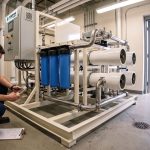
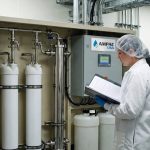
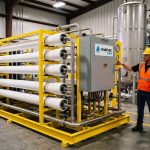
Advanced purification technologies, such as those engineered by AMPAC USA, are critical components of multi-barrier protection against waterborne pathogens. Systems like reverse osmosis and specialized filtration effectively remove contaminants, ensuring safe drinking water. With over 30 years of field experience, AMPAC USA designs robust solutions for applications from military bases to municipalities, directly contributing to epidemic prevention.
AMPAC USA engineers custom water purification systems for commercial, industrial, and emergency applications — from 500 GPD to multi-million GPD. Trusted by municipalities, military, and industry worldwide.