Quick Answer: Newark, NJ faced a severe lead contamination crisis when city-distributed water filters failed to reduce lead adequately due to corrosive water chemistry incompatibility. The EPA took enforcement action in 2019, and the city accelerated lead service line replacement. The crisis highlighted that filter certification must match actual water chemistry — no filter protects against all water conditions.
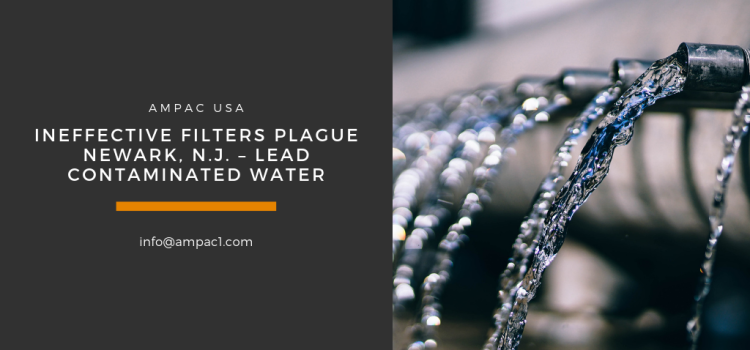
Just last fall, Newark city in new Jersey distributed around 40,000 filters door to door to help families with lead supply lines. This was done to fight against the lead contamination found in the water which leaked through the old pipes. A recent test by EPA reported that the filters provided to eliminate lead may not be effective. And the report is now confirmed as the city began handing out bottled water last Monday.
The city, which is not new to the problem of lead contamination faces yet another problem with the fleeting solution of filters. The largest supply in the state, the city provides water to 280,000 people. To cope with the problem of lead, the city handed out filters and cartridges which claimed to remove 99% of the contamination. EPA’s report, stating otherwise found that the suggested filters “may not be reliably effective.” Tests were conducted on two homes and samples showed that the filtered water had lead levels more than 15 parts per billion, a Federal and State standard.
What Is The Level Of Damage?
Around 15,000 homes had lead service supply lines which brought the contamination into their houses. Lead contamination can cause more harm to children and pregnant women as they are the most vulnerable. Authorities have made it clear that there is no safe level of lead and that the dangers of exposure include infertility, cognitive dysfunction, and organ damage. The city has now advised the residents to take precautions and get their families checked for exposure levels.
Is Bottled Water Enough?
The authorities have already sprung in action by distributing bottled water to the houses. However, the supply may not be regular every day as the city has to provide for 15,000 homes, maybe more. Additionally, the transport of bottles each day may require more time.
Emmett Coleman, a Newark resident, told USA Today that he spent an hour on Monday waiting for two cases of bottles. “In the senior building, it’s bad,” he said. “All of us are sick or have problems, and we can’t drink the water. And the filters aren’t working.”
In January, the Mayor of Newark Ras Baraka urged the President to help repair and rebuild the city’s water infrastructure. Repairing the lead lines alone is estimated to cost $70 million said, Baraka. Till now, help hasn’t arrived while the filters give out. Bottled supply may not be enough every time and so one will have to look for additional sources of water.
How Can I Ensure Constant Water Supply At Home?
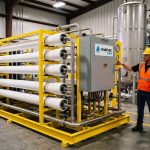
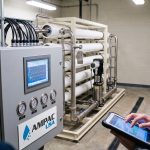
For the time, it is helpful for residents to start considering purchasing compact treatment alternatives for the home. It can be 3-5 Stage RO Purifiers that are verified for their performance or emergency portable watermakers. If one is not willing to get a system installed then portable emergency systems are the best, they can be moved and used everywhere. As an option, communities can come together to get a mobile reverse osmosis unit that will be providing safe drinking water in the matter of minutes in areas where bottles may not reach on time. Read more about safe alternatives for a constant water supply.
If you have any questions about how to gain access to safe supply, call AMPAC USA at (909) 548 4900 or drop us an inquiry through our website www.ampac1.com. The company experts shall be helping you out with your water supply immediately and we have customer service ready to assist you 24×7.
Newark, New Jersey’s lead water crisis became a national flashpoint in 2019 when the EPA issued a rare administrative order requiring the city to take immediate corrective action after lead levels exceeded the EPA action level of 15 ppb in numerous samples. What made Newark particularly alarming was that the city had distributed certified lead-reducing filters to affected residents — yet testing revealed many filters were not adequately reducing lead. Subsequent investigation determined that Newark’s water chemistry (particularly pH, alkalinity, and orthophosphate levels) was incompatible with the NSF Standard 53-certified filters the city distributed, a fundamental mismatch between filter design parameters and actual field conditions.
The lead source in Newark, as in most urban lead crises, was the city’s extensive lead service line infrastructure. Newark had an estimated 18,000-23,000 lead service lines connecting homes to the water main — a legacy of construction practices prevalent before 1986 when lead pipes were banned for new installations. Corrosive water chemistry accelerated lead leaching from these lines. The city ultimately received $120 million in settlement funds to accelerate lead service line replacement, which remains the only permanent solution to infrastructure-based lead contamination.
The technical lesson is important: NSF Standard 53 filter certifications are based on standardized test water conditions. Real-world water chemistry — pH, hardness, alkalinity, chlorine concentration, organic content — affects filter performance significantly. Consumers in lead-affected areas should verify their specific filter’s tested performance characteristics against local water chemistry, or choose reverse osmosis systems, which achieve consistent lead reduction across a much wider range of water chemistry conditions. AMPAC USA NSF-certified RO systems reduce lead to below detection limits regardless of source water chemistry variations.
Frequently Asked Questions
Why did the distributed water filters fail to remove lead in Newark, NJ?
The filters distributed in Newark failed primarily due to incompatibility with the city’s corrosive water chemistry. While certified for lead removal, their effectiveness was compromised by the specific water conditions, highlighting that filter certification must match the actual water chemistry to ensure reliable protection.
What lead levels were detected in Newark’s filtered water?
Tests conducted by the EPA on filtered water samples in Newark revealed lead levels exceeding 15 parts per billion. This level is above the Federal and State standard, confirming that the distributed filters were not reliably effective in reducing lead contamination.
What are the health risks associated with lead exposure from drinking water?
Lead contamination poses significant health risks, particularly for children and pregnant women, as there is no safe level of lead exposure. Dangers include infertility, cognitive dysfunction, and organ damage, prompting authorities to advise residents to get checked for exposure levels.
How many Newark homes were affected by lead service lines?
Approximately 15,000 homes in Newark, New Jersey, were identified as having lead service supply lines, which were the primary source of lead contamination in their drinking water. This widespread issue necessitated the city’s efforts to distribute filters and eventually bottled water.
What role did the EPA play in Newark’s lead contamination crisis?
The EPA took enforcement action in 2019 after tests confirmed the distributed filters were not reliably effective in reducing lead. Their report led to the city accelerating lead service line replacement and initiating the distribution of bottled water to affected residents.
Need a Water Treatment Solution?AMPAC USA engineers custom water purification systems for commercial, industrial, and emergency applications — from 500 GPD to multi-million GPD. Trusted by municipalities, military, and industry worldwide.