
Commercial reverse osmosis systems represent a significant investment for businesses, but the return is measurable: consistent water quality, regulatory compliance, reduced chemical costs, and equipment protection. Whether you are outfitting a restaurant, hospital, laboratory, or manufacturing facility, understanding the full cost picture helps you budget accurately and choose the right system. This guide breaks down 2026 pricing by capacity, the factors that drive costs up or down, and how to calculate your total cost of ownership.
Commercial RO System Pricing by Capacity (2026)
The primary cost driver for any commercial RO system is its rated capacity in gallons per day (GPD). Larger systems require more membrane elements, higher-capacity pumps, larger pre-treatment equipment, and more robust frames and controls. The following pricing table reflects 2026 market rates from major manufacturers including AMPAC USA:
| System Capacity | Price Range | Typical Applications | Membrane Elements | Recovery Rate |
|---|---|---|---|---|
| 200 GPD | $2,000 – $4,000 | Small coffee shops, dental offices | 1-2 elements | 50-60% |
| 500 GPD | $3,500 – $6,000 | Restaurants, small labs, clinics | 1-2 elements | 50-65% |
| 1,000 GPD | $5,000 – $10,000 | Hotels, medium restaurants, dialysis clinics | 2-4 elements | 60-75% |
| 2,000 GPD | $8,000 – $15,000 | Medium hotels, food processing, car washes | 2-4 elements | 65-75% |
| 5,000 GPD | $15,000 – $30,000 | Large hotels, breweries, light manufacturing | 4-6 elements | 70-80% |
| 10,000 GPD | $25,000 – $50,000 | Manufacturing, large F&B operations | 6-12 elements | 75-85% |
| 20,000 GPD | $40,000 – $80,000 | Industrial bottling, pharmaceutical, municipal | 12-24 elements | 75-85% |
Factors That Affect Commercial RO System Cost
The price ranges above reflect typical scenarios. Several factors can push costs toward the higher or lower end of each range:
1. Feed Water Quality
This is the single biggest cost variable. Water with high TDS (total dissolved solids), hardness, iron, silica, or biological contamination requires more extensive pretreatment, which adds $1,000-$15,000+ to the system cost. Municipal tap water (100-500 ppm TDS) requires minimal pretreatment, while well water (500-5,000 ppm) or brackish water (1,000-15,000 ppm) may need softening, media filtration, chemical dosing, and antiscalant systems.
2. Required Permeate Quality
Standard commercial applications need permeate TDS below 50-100 ppm. Pharmaceutical manufacturing (USP Purified Water) requires below 10 ppm, and semiconductor fabrication needs below 1 ppm. Higher purity requirements may mandate double-pass RO or RO followed by electrodeionization (EDI), adding 40-60% to the base system cost.
3. Automation and Controls
Basic systems use simple switches and manual valves ($0 added cost). Mid-range systems add PLC controllers with touchscreen displays, automated flushing, and TDS monitoring ($2,000-$5,000). High-end systems include full SCADA integration, remote monitoring, automatic chemical dosing, and data logging ($5,000-$15,000+).
4. Materials of Construction
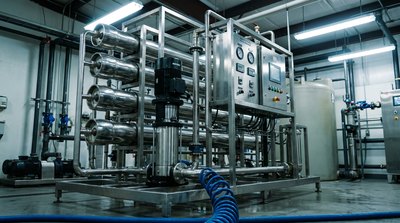
Standard commercial systems use powder-coated steel frames and PVC piping. Food-grade and pharmaceutical applications require stainless steel (304 or 316L) construction, sanitary connections, and polished surfaces – adding 30-50% to the frame and piping cost.
5. Installation Costs
Professional installation typically costs 10-20% of the equipment price. Factors include plumbing connections, electrical work, drain access, pretreatment integration, and commissioning. Budget $1,000-$3,000 for small systems and $5,000-$15,000 for large installations.
Total Cost of Ownership: The Complete Picture
The purchase price is only part of the total investment. Smart buyers evaluate total cost of ownership (TCO) over the expected system lifespan of 10-15 years. Here is a typical TCO breakdown for a commercial RO system:
| Cost Category | % of 5-Year TCO | 2,000 GPD Example | 10,000 GPD Example |
|---|---|---|---|
| Equipment Purchase | 35-40% | $12,000 | $40,000 |
| Installation | 10-15% | $2,500 | $8,000 |
| Pre-filters (5yr) | 8-12% | $2,500 | $6,000 |
| Membrane Replacement (5yr) | 10-15% | $3,000 | $12,000 |
| Chemical Costs (5yr) | 5-8% | $1,500 | $5,000 |
| Electricity (5yr) | 8-12% | $2,000 | $8,000 |
| Service/Labor (5yr) | 5-10% | $2,500 | $6,000 |
| 5-Year Total | 100% | $26,000 | $85,000 |
| Cost Per Gallon Produced | – | $0.007/gal | $0.005/gal |
ROI Calculation: When Does a Commercial RO System Pay for Itself?
Consider a restaurant currently spending $500/month on bottled water and water delivery. A 1,000 GPD commercial RO system at $8,000 installed produces the same quality water at approximately $50/month in operating costs (electricity + filters + membrane amortization).
- Monthly savings: $500 – $50 = $450/month
- Annual savings: $5,400
- System cost (installed): $10,000
- Payback period: 22 months
- 5-year net savings: $17,000
For manufacturing facilities where water quality directly affects product quality and equipment life, the ROI is even faster. Scale buildup from untreated water can reduce boiler efficiency by 12% per millimeter of scale (according to the U.S. Department of Energy), and RO-treated water eliminates scaling entirely.
Pretreatment Costs: What You Might Need Before the RO
Pretreatment protects the RO membrane and is often required, adding to the total system cost:
| Pretreatment | When Needed | Added Cost |
|---|---|---|
| Water Softener | Hardness > 5 gpg (85 ppm) | $1,500 – $5,000 |
| Sediment Filter (5-20 micron) | Always recommended | $200 – $800 |
| Carbon Filter | Chlorinated water (municipal) | $500 – $2,000 |
| Iron/Manganese Filter | Well water with Fe > 0.3 ppm | $1,000 – $4,000 |
| Antiscalant Dosing System | TDS > 1,000 ppm or high silica | $800 – $3,000 |
| UV Sterilization | Biological contamination risk | $500 – $2,500 |
How to Get the Best Price on a Commercial RO System
Configurations and capacities are listed under AMPAC USA’s industrial reverse osmosis systems.
- Get a water analysis first: A $50-$150 water test prevents you from over-specifying (or under-specifying) your system. It tells you exactly what pretreatment you need and what you can skip.
- Size accurately: An oversized system wastes money on unused capacity. An undersized system runs at maximum load continuously, shortening membrane life. Calculate your actual peak daily demand, not a guess.
- Compare total cost of ownership, not just purchase price: A cheaper system with expensive proprietary membranes and frequent filter changes can cost more over 5 years than a premium system with standard components.
- Ask about membrane compatibility: Systems using industry-standard 2.5″x40″ or 4″x40″ membrane elements let you source replacements from multiple vendors. Proprietary membrane sizes lock you into one supplier.
- Request references: Ask for customer references in your industry. A manufacturer with experience in your specific application will design a more efficient, reliable system.
Frequently Asked Questions: Commercial RO System Costs
How much does a 500 GPD commercial RO system cost?
A 500 GPD commercial reverse osmosis system typically costs between $3,500 and $6,000 in 2026. This size is suitable for restaurants, small laboratories, and clinics, usually featuring 1-2 membrane elements and achieving a 50-65% recovery rate. AMPAC USA systems in this range offer reliable performance for consistent water quality.
What is the total cost of ownership for a commercial RO system?
The total cost of ownership for a commercial reverse osmosis system over five years is typically 2-3 times the initial purchase price. This comprehensive cost includes installation, ongoing maintenance, and periodic membrane replacement. Factoring in these operational expenses is crucial for accurate budgeting and long-term financial planning.
What factors influence the price of a commercial RO system?
The primary factor influencing commercial RO system cost is its rated capacity in gallons per day (GPD), as larger systems require more components. Beyond capacity, feed water quality is a significant driver, impacting the necessary pre-treatment and system robustness. Other factors include system automation levels, specific material requirements, and additional features like advanced monitoring.
Are larger commercial RO systems more cost-effective per gallon?
Yes, larger commercial reverse osmosis systems are significantly more cost-effective per gallon produced. For instance, a 200 GPD system may cost $10-20 per GPD, while a 20,000 GPD system costs roughly $2-4 per GPD. This economy of scale makes higher-capacity systems a more efficient investment for businesses with substantial water purification needs.
What applications are suitable for a 10,000 GPD commercial RO system?
A 10,000 GPD commercial reverse osmosis system, typically costing $25,000-$50,000, is ideal for large-scale operations requiring significant purified water volumes. Common applications include manufacturing facilities, large food & beverage plants, and municipal water treatment. These systems usually incorporate 6-12 membrane elements and achieve high recovery rates of 75-85%.
Get a Custom Quote for Your Commercial RO System
Every commercial water treatment application is different. Feed water quality, output requirements, space constraints, and budget all influence the optimal system design. AMPAC USA has engineered commercial RO systems from 200 to 20,000 GPD for restaurants, hotels, hospitals, laboratories, and manufacturers across six continents.
Request a free quote from AMPAC USA – we provide a detailed proposal with equipment specifications, pretreatment recommendations, installation scope, and total cost of ownership analysis. Call (909) 762-8020 or complete our online quote request form.
Related Articles
- Whole House Reverse Osmosis System for Commercial & Industrial Water Treatment
- Cannabis Water Treatment: Why Commercial Grows Use Reverse Osmosis
- Commercial Reverse Osmosis System Buyer's Guide: 100 to 10,000 GPD
- Does Reverse Osmosis Remove PFAS? What Commercial Operators Need to Know
Conclusion
Contact our team at info@ampac1.com or (909) 548-4900 to discuss your water treatment needs.
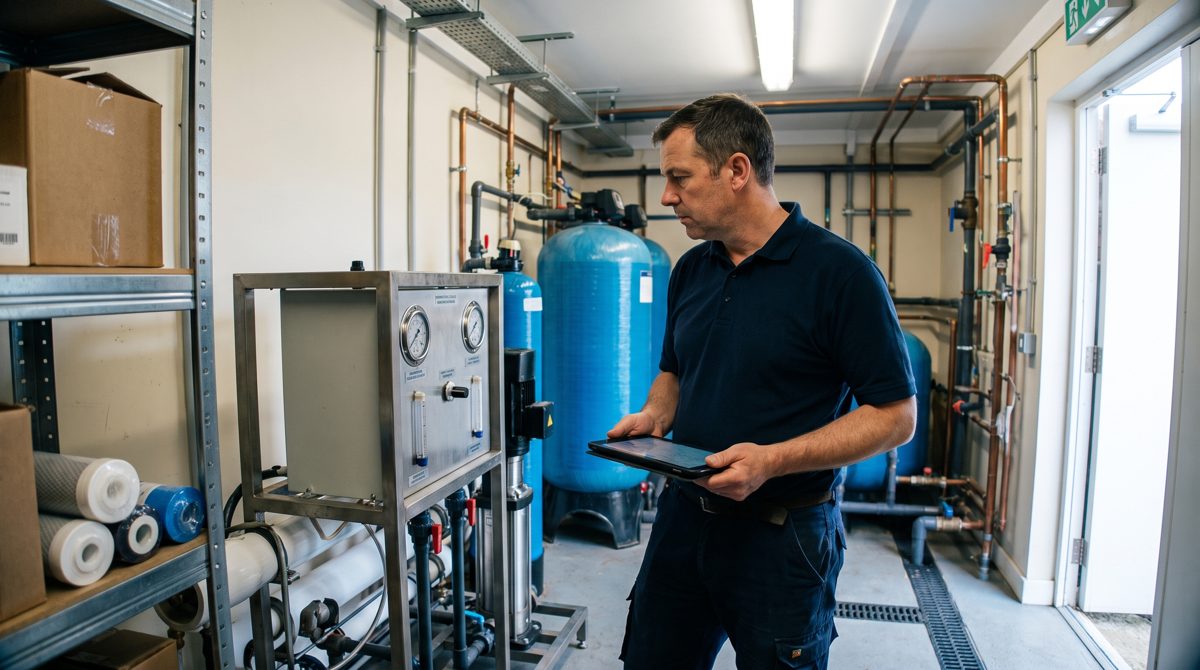
Send us your daily water demand, your feed water source and the floor space you have. An engineer will return a model recommendation and a quote.
Related: Commercial RO, 1,000 GPD | Turnkey commercial RO, 4,400 GPD | Turnkey commercial RO, 8,000 GPD