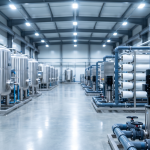

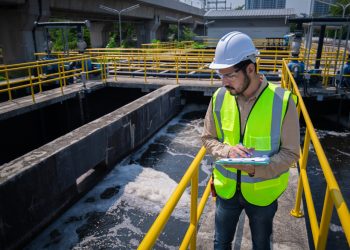

Seawater desalination stands as a testament to human ingenuity—a transformative technology that turns the vast salty waters of our planet into fresh, potable water. Covering over 70% of Earth, our oceans beckon as vast resources, especially when the pressing concern of freshwater scarcity hangs like a cloud.
Why is Seawater Desalination Important?
In our rapidly evolving world, where urbanization and population growth strain already limited freshwater resources, the significance of seawater desalination becomes ever more pronounced. Climate change has led to unpredictable weather patterns, with some regions facing prolonged droughts, making freshwater even scarcer. Desalination not only offers a solution to such challenges but also represents hope for countless communities around the globe.
Detailed Overview of Desalination Methods
To the uninitiated, the process of turning saltwater into freshwater might seem straightforward, but it is a complex procedure. Over time, engineers and scientists have refined and developed several methods:
Reverse Osmosis (RO):
Overview: Reverse osmosis (RO) is the leading method in modern desalination efforts. It works by pushing seawater through a specially designed semi-permeable membrane.
Mechanism: The pressure forces the water molecules through the membrane, leaving salt and impurities behind.
Advantages: Highly energy-efficient and produces water of excellent quality. Ideal for areas with limited energy resources or where renewable energy can be harnessed.
Challenges: Membrane fouling and the need for regular maintenance can pose challenges.
Read: Factors to Consider When Selecting a Reverse Osmosis System: A Buyer’s Guide
Multi-stage Flash Distillation (MSF):
Overview: A more traditional method, MSF, has been around longer than RO.
Mechanism: Seawater is heated and introduced into a chamber with low pressure. Here, it “flashes” into steam due to the difference in temperature and pressure. The steam is then condensed to produce freshwater.
Advantages: Can handle large volumes of water and is often paired with power generation plants.
Challenges: It’s energy-intensive, which makes it less suitable for regions with limited energy resources.
Electrodialysis:
Overview: Mostly used for brackish water but can be applied to seawater with modifications.
Mechanism: Electrical potential drives the salt ions out of the seawater, leaving behind purified water.
Advantages: Effective for water with lower salinity and can be energy efficient under certain conditions.
Challenges: Not ideal for highly saline waters and requires a consistent power supply.
Read : The Importance of Seawater Desalination in Today’s World
Benefits of Seawater Desalination
The primary advantage of seawater desalination lies in its ability to provide potable water to regions grappling with water scarcity. This water can support urban centers, industries, and even agriculture. Beyond the direct consumption benefits, desalination:
Boosts Economic Growth: A reliable water supply can spur industrial growth, create jobs, and bolster economies, especially in arid regions.
Enhances Water Security: In geopolitical terms, having access to freshwater reduces dependency on external sources and potential conflicts over shared water resources.
Environmental Impact and Concerns
While desalination offers a lifeline, it’s not without its environmental challenges:
Brine Disposal: The saline byproduct, or brine, poses a threat to marine ecosystems, especially when released without treatment.
Energy Consumption: High energy requirements contribute to greenhouse gas emissions unless renewable energy sources are utilized.
Marine Life Impact: Intake pipes can harm marine life, drawing them in and potentially causing significant ecological disruption.
Steps to Implement a Desalination Process
Conduct a Feasibility Study: Begin with a comprehensive study to assess local water needs, potential environmental impacts, and the ideal desalination method.
Choose a Suitable Location: Selecting a site is crucial. It should minimize environmental impact, consider potential growth, and factor in transport logistics.
Develop Infrastructure: This phase involves constructing intake and outfall structures, desalination facilities, and storage reservoirs. Modern facilities consider green designs and energy efficiency.
Continuous Monitoring: Regular quality checks ensure the produced water meets health standards. Equally vital is the consistent assessment of environmental impacts, tweaking processes as necessary.
Public Engagement: Winning the local community’s trust and support is paramount. Through education and transparent communication, a symbiotic relationship can be fostered, benefiting all stakeholders.
Conclusion
Seawater desalination presents an answer to one of humanity’s most pressing challenges. Through understanding its intricacies, benefits, and implications, we can responsibly harness this marvel, guiding our planet towards a sustainable and water-secure future.
AMPAC USA’s seawater desalination systems have played a significant role in water scarcity problems. Our plants, installed in various parts of the world, are not only sources of freshwater but also symbols of hope and resilience.
Talk to our Experts for Water Purification Systems at AMPAC USA
You can talk to the water quality experts at AMPAC USA. Founded in 1990, AMPAC USA has been designing, deploying, and maintaining advanced, reliable, robust, and cost-effective water treatment solutions for decades.
From offering seawater desalination systems to emergency portable watermakers, residential reverse osmosis to commercial reverse osmosis water, brackish water reverse osmosis to solar power water systems, and mobile water provisioning systems to industrial reverse osmosis systems, does it all.
AMPAC USA also offers type 1 laboratory water, water quality monitor systems, water softeners & conditioners, and wastewater treatment solutions. You can choose the products you like best or need and place an order today to ensure quick deliveries. Our team will be happy to assist you find the right solution according to your pure water needs after asking you a few simple questions.
For more information, visit https://www.ampac1.com/ or call +1 (909) 548-4900.
Frequently Asked Questions
How quickly can an emergency water purification unit be deployed?
AMPAC USA's EPRO and mobile RO units can be operational within 30–60 minutes of arrival on-site. Trailer-mounted and skid-mounted systems are pre-plumbed and pre-wired, requiring only connection to a power source and water source. Units treat river water, lake water, or brackish groundwater.
What flow rates are available for emergency water treatment?
AMPAC USA's emergency systems range from 1,500 GPD portable units to 50,000+ GPD trailer-mounted systems. Military-specification units are available for forward operating base deployment, producing potable water meeting EPA and WHO drinking water standards from virtually any source.
Are emergency RO systems suitable for disaster relief operations?
Yes. AMPAC USA's emergency systems are used by FEMA, the U.S. military, and international NGOs for disaster relief. They treat flood water, contaminated groundwater, and brackish sources, removing bacteria, viruses, and chemical contaminants to produce safe drinking water on-site.
What power sources can emergency water purification systems use?
AMPAC USA's emergency systems can run on generator power (120/240V or 480V 3-phase), solar panels with battery backup, or vehicle power take-off (PTO). Low-power models consume as little as 0.5 kW, making them viable for off-grid deployment.
How durable are military-grade water purification systems?
AMPAC USA's military systems are built to MIL-SPEC standards with stainless steel frames, powder-coated components, and UV-resistant materials. They are designed to operate in temperatures from -20°F to 120°F and are vibration-tested for transport in military vehicles.
Related Articles
- Seawater Desalination in 2026: Technologies, Costs, and the Future of Fresh Water
- Seawater Desalination Systems: Turning the Tide on Global Water Scarcity
- Seawater Desalination: Tapping into Seawater’s Potential for Drinkable Water
- Water Treatment Processes: Transforming Raw Water into Safe Drinking Water through Seawater Desalination
Conclusion
This post highlighted how emergency and military-grade water purification systems provide safe drinking water rapidly in the most challenging field conditions. For organizations requiring deployable water treatment capability, AMPAC USA engineers portable and trailer-mounted systems built to perform wherever they are needed. Contact our team at info@ampac1.com or (909) 548-4900 to discuss your emergency water treatment requirements.
AMPAC USA engineers custom water purification systems for commercial, industrial, and emergency applications — from 500 GPD to multi-million GPD. Trusted by municipalities, military, and industry worldwide.