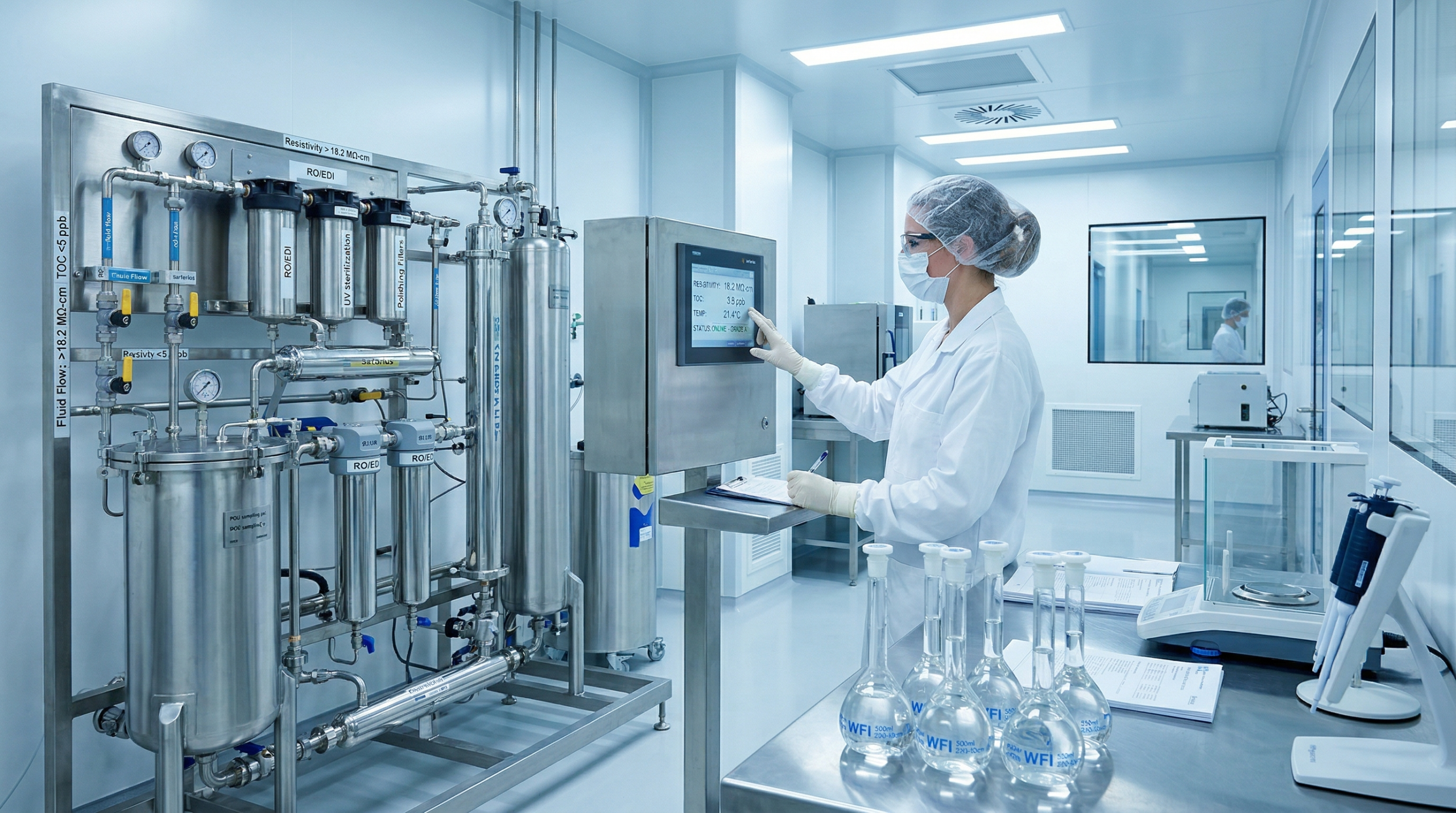

USP Grade Water Purification: Pharmaceutical Water Treatment Systems Guide 2026
Pharmaceutical water is not just clean water. It is a precisely defined, rigorously tested, and continuously monitored critical utility that directly impacts drug product safety and regulatory compliance. Whether you are building a new pharmaceutical manufacturing facility, upgrading an existing water system, or preparing for an FDA inspection, understanding USP water grades, system design, and validation requirements is essential. This guide covers everything pharmaceutical engineers and quality professionals need to know about USP grade water purification systems in 2026.
Quick Answer: What Is USP Grade Water?
USP grade water refers to water that meets specific quality standards defined by the United States Pharmacopeia (USP) for use in pharmaceutical manufacturing, laboratory testing, and medical device processing. The three primary grades are Purified Water (PW), Highly Purified Water (HPW), and Water for Injection (WFI). Each grade has defined limits for conductivity, total organic carbon (TOC), microbial count, and (for WFI) bacterial endotoxins. Production typically requires multi-stage treatment including reverse osmosis, electrodeionization, UV oxidation, and ultrafiltration, followed by comprehensive validation under FDA 21 CFR Part 211 and USP Chapters <1231> and <645>.
Understanding USP Water Grades and Specifications
The United States Pharmacopeia defines several grades of pharmaceutical water, each with specific quality attributes and permitted uses. The European Pharmacopoeia (Ph. Eur.) and Japanese Pharmacopoeia (JP) maintain similar but not identical specifications. For facilities producing drugs for the U.S. market, USP standards are the governing authority, enforced through FDA inspections under Current Good Manufacturing Practice (cGMP) regulations.
USP Water Grade Specifications
| Parameter | USP Purified Water (PW) | USP Highly Purified Water (HPW) | USP Water for Injection (WFI) |
|---|---|---|---|
| Conductivity | ≤1.3 μS/cm at 25°C (Stage 1) or per USP <645> three-stage test | ≤1.1 μS/cm at 25°C | ≤1.3 μS/cm at 25°C (Stage 1) or per USP <645> three-stage test |
| Total Organic Carbon (TOC) | ≤500 ppb (0.5 mg/L) | ≤500 ppb (0.5 mg/L) | ≤500 ppb (0.5 mg/L) |
| Microbial Limits | ≤100 CFU/mL (action limit); alert at 50 CFU/mL | ≤10 CFU/100 mL | ≤10 CFU/100 mL |
| Bacterial Endotoxins | Not specified | ≤0.25 EU/mL | ≤0.25 EU/mL |
| Production Methods | Any validated method (RO, EDI, distillation, or combination) | RO + EDI or equivalent (distillation not required) | Distillation or equivalent validated process (RO-based systems now accepted by FDA) |
| Typical Applications | Oral dosage forms, topical products, excipient preparation, equipment cleaning, laboratory reagents | Biologics preparation (Ph. Eur. requirement), equipment rinsing | Parenteral (injectable) products, ophthalmic solutions, inhalation products, final equipment rinse for sterile manufacturing |
| Storage & Distribution | Ambient or hot loop; recirculated to prevent stagnation | Hot loop (65–80°C) or ozonated ambient loop | Hot loop (80–90°C) maintained continuously; no dead legs >6 pipe diameters |
Key Takeaway
The critical distinction between Purified Water and WFI is the endotoxin requirement. Bacterial endotoxins (lipopolysaccharides from gram-negative bacteria) can cause pyrogenic reactions in patients receiving injectable drugs. WFI must meet a strict limit of 0.25 EU/mL, which demands both superior purification technology and rigorous microbial control in the distribution system. The FDA now accepts non-distillation methods for WFI production, provided the system is properly validated.
Regulatory Framework: FDA, USP, and cGMP Requirements
Pharmaceutical water systems operate under one of the most heavily regulated frameworks in the water treatment industry. Understanding the regulatory landscape is essential for designing compliant systems and passing FDA inspections.
21 CFR Part 211: Current Good Manufacturing Practice
The FDA’s 21 CFR Part 211 establishes minimum cGMP requirements for pharmaceutical manufacturing. Section 211.48 specifically addresses plumbing, requiring that water supply systems furnish water of appropriate chemical and microbiological quality for their intended use. Section 211.68 requires that automated water systems be validated, and that appropriate controls be established to prevent contamination of drug products. Section 211.67 mandates documented cleaning and maintenance procedures for equipment and utensils, including water system components.
FDA investigators routinely evaluate pharmaceutical water systems during facility inspections. Common citations (Form 483 observations) include inadequate validation documentation, failure to investigate out-of-specification (OOS) results, insufficient sampling frequency, and poorly maintained distribution systems with dead legs or inadequate sanitization procedures.
USP Chapter <1231>: Water for Pharmaceutical Purposes
USP <1231> is an informational chapter that provides detailed guidance on pharmaceutical water system design, operation, and monitoring. While informational chapters are not legally enforceable in the same way as monograph standards, FDA inspectors reference <1231> as the industry benchmark for acceptable practice. Key topics addressed include source water considerations, pretreatment design, purification technology selection, distribution system design (loop configuration, flow velocity, dead leg management), microbial control strategies (thermal sanitization, ozone, UV), and monitoring programs.
USP Chapter <645>: Water Conductivity
USP <645> defines the three-stage conductivity test procedure for Purified Water and WFI. Stage 1 is an in-line measurement at the point of use: if the measured conductivity is at or below the Stage 1 limit (which varies by temperature, e.g., 1.3 μS/cm at 25°C), the water passes. If it exceeds Stage 1, a Stage 2 offline measurement is performed under controlled conditions. If Stage 2 fails, Stage 3 involves pH measurement and comparison to conductivity/pH tables. This tiered approach allows efficient routine monitoring while providing a definitive compliance determination when needed.
USP Chapter <643>: Total Organic Carbon
USP <643> specifies the TOC test method and acceptance criterion (500 ppb) for pharmaceutical water. TOC is a surrogate measure for organic contamination, including cleaning agent residues, biofilm byproducts, and leachables from system materials. Online TOC analyzers provide continuous monitoring and are considered the industry standard for pharmaceutical water systems. The FDA expects TOC monitoring data as part of water system validation and routine quality programs.
Pharmaceutical Water System Design
A properly designed pharmaceutical water purification system transforms potable feed water into USP-grade water through a series of treatment stages. Each stage targets specific contaminants and builds upon the previous stage’s output. The following sections describe the standard treatment train for a modern pharmaceutical water system capable of producing Purified Water or WFI.
Stage 1: Feed Water Pretreatment
Municipal or well water feed requires pretreatment to protect downstream purification equipment and ensure consistent system performance. A typical pretreatment train includes:
- Multimedia filtration: Removes suspended solids, turbidity, and particulates to achieve a Silt Density Index (SDI) below 3, as recommended by the EPA for RO membrane protection.
- Activated carbon filtration: Removes free chlorine (which damages RO membranes), chloramines, and organic compounds. Carbon beds should be sized for empty bed contact time (EBCT) of 5 to 10 minutes and monitored for chlorine breakthrough.
- Water softening: Ion exchange softeners remove hardness minerals (calcium and magnesium) that cause RO membrane scaling. Softeners must use NSF/ANSI 61-certified resin for pharmaceutical applications.
- Antiscalant dosing: Chemical antiscalants prevent silica, barium sulfate, and other sparingly soluble salts from precipitating on RO membranes at the system’s designed recovery rate.
- Cartridge filtration: A final 5-micron or 1-micron cartridge filter provides a safety barrier to protect the high-pressure RO pump and membranes from any particles that bypass upstream pretreatment.
Stage 2: Primary Purification — Reverse Osmosis
Reverse osmosis is the workhorse of pharmaceutical water purification. Modern thin-film composite (TFC) RO membranes reject 95% to 99.5% of dissolved solids, 99%+ of bacteria, 99%+ of organic molecules above 200 daltons, and 90% to 99% of bacterial endotoxins in a single pass. For pharmaceutical applications, double-pass RO (where permeate from the first pass is fed to a second set of RO membranes) is common to achieve the ultra-low conductivity required for USP water grades.
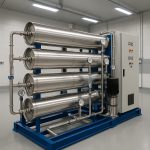
Pharmaceutical RO systems must be designed with specific features including sanitary connections (Tri-Clamp or equivalent), 316L stainless steel or polished stainless piping on the permeate side, sample ports at critical control points, and the ability to perform clean-in-place (CIP) and sanitize-in-place (SIP) operations. AMPAC USA manufactures industrial reverse osmosis systems that can be configured to meet pharmaceutical production requirements with appropriate materials and instrumentation.
Stage 3: Polishing — Electrodeionization (EDI)
Electrodeionization (also known as continuous electrodeionization or CEDI) replaces traditional mixed-bed deionization for pharmaceutical water production. EDI uses ion-exchange resins, selective membranes, and an applied electrical current to continuously remove ionized and weakly ionized species from RO permeate, producing water with resistivity exceeding 15 megohm-cm (conductivity below 0.067 μS/cm).
The key advantage of EDI over conventional deionization is that it does not require chemical regeneration with hazardous acids and caustics, eliminating a significant source of contamination risk and chemical waste. EDI modules are available in sanitary designs with FDA-compliant materials of construction. The EPA recognizes EDI as a best available technology for producing high-purity water with reduced chemical waste compared to regenerable ion exchange systems.
Stage 4: Microbial Control — UV Oxidation
Ultraviolet (UV) treatment serves dual purposes in pharmaceutical water systems. A 254 nm UV unit provides germicidal disinfection, inactivating bacteria, viruses, and other microorganisms. A 185 nm UV unit (or dual-wavelength 185/254 nm) provides both disinfection and TOC reduction by breaking down organic molecules through photolysis and hydroxyl radical generation. For WFI systems targeting TOC below 100 ppb, the 185 nm UV stage is essential.
UV systems for pharmaceutical water must be validated for dose delivery, equipped with UV intensity monitors, and designed for easy lamp replacement and quartz sleeve cleaning. The NSF/ANSI 55 standard provides a framework for UV system validation, though pharmaceutical applications typically exceed the minimum requirements of this standard.
Stage 5: Final Filtration — 0.2 Micron Membrane Filter
A sterilizing-grade 0.2 μm membrane filter at the final point of the treatment train provides a physical barrier against bacteria and particulates. For WFI systems, an ultrafilter (UF) with a molecular weight cutoff of 6,000 to 13,000 daltons may be installed to provide endotoxin removal as an additional safety measure. These filters must be integrity-tested regularly (bubble point test or forward flow test) per the manufacturer’s validated procedures and FDA guidance.
Complete Pharmaceutical Water System Treatment Train
| Stage | Technology | Primary Function | Key Contaminants Removed |
|---|---|---|---|
| 1 | Multimedia Filter | Particulate removal | Suspended solids, turbidity (to SDI <3) |
| 2 | Activated Carbon | Dechlorination + organics removal | Free chlorine, chloramines, VOCs, NOM |
| 3 | Water Softener | Hardness removal | Calcium, magnesium (scale prevention) |
| 4 | Cartridge Filter (5 μm) | Final prefiltration | Fine particulates, carbon fines |
| 5 | Single or Double-Pass RO | Primary purification | 95%–99.5% TDS, bacteria, endotoxins, organics |
| 6 | Electrodeionization (EDI) | Ion polishing | Residual ions to <0.067 μS/cm |
| 7 | UV (185/254 nm) | Disinfection + TOC reduction | Bacteria, TOC to <100 ppb |
| 8 | 0.2 μm Membrane Filter | Sterilizing filtration | Bacteria, particulates |
| 9 (WFI) | Ultrafiltration (optional) | Endotoxin removal | Endotoxins, pyrogens |
Distribution System Design for Pharmaceutical Water
The distribution system is where many pharmaceutical water systems fail. Producing USP-grade water is only half the challenge; maintaining that quality at every point of use throughout the facility requires careful distribution system engineering.
Loop Configuration
Pharmaceutical water distribution systems use a continuously recirculating loop design. Water flows from the generation system through the distribution loop, past each point of use, and returns to a storage tank or directly to the system inlet. This continuous circulation prevents stagnation, maintains thermal control, and ensures consistent water quality at every use point. The FDA and USP <1231> strongly recommend loop configurations over branched (dead-end) distribution designs.
Materials of Construction
Distribution piping for pharmaceutical water systems must be constructed from materials that do not leach contaminants, support biofilm growth, or corrode under operating conditions. The industry standard is 316L stainless steel with electropolished interior surfaces (Ra ≤ 0.8 μm or 32 microinch) for hot WFI loops. For ambient Purified Water systems, polyvinylidene fluoride (PVDF) or polypropylene piping certified to FDA 21 CFR and USP Class VI is an acceptable alternative. All joints should be orbital-welded (stainless steel) or heat-fused (plastic) to eliminate crevices where biofilm can develop.
Dead Leg Management
Dead legs are sections of piping that extend from the main distribution loop to a point-of-use valve where water is not continuously flowing. USP <1231> recommends that dead legs not exceed 6 pipe diameters in length (measured from the center of the main loop to the valve). Longer dead legs create stagnant zones where microbial contamination can develop and migrate back into the main loop. Modern pharmaceutical water system designs use zero-dead-leg (ZDL) valve configurations and block-and-bleed assemblies to minimize this risk.
Thermal Sanitization and Microbial Control
Hot WFI systems operate continuously at 80°C to 90°C (176°F to 194°F), which inherently controls microbial growth. The water is cooled at the point of use through sanitary heat exchangers as needed. Ambient Purified Water systems require periodic thermal sanitization (heating the loop to above 80°C for a validated duration) or continuous ozone injection (typically 0.02 to 0.04 ppm) to maintain microbial control. Ozone must be removed by UV destruction before points of use to avoid residual oxidant contamination.
Key Takeaway
Distribution system design is where pharmaceutical water quality is won or lost. The most advanced generation system in the world cannot compensate for a poorly designed distribution loop with excessive dead legs, unsuitable materials, or inadequate sanitization. Invest in proper distribution engineering from the start. Retrofitting a non-compliant distribution system is significantly more expensive than designing it correctly the first time.
Validation Requirements: IQ, OQ, PQ
Pharmaceutical water system validation is a structured process that demonstrates the system consistently produces water meeting predetermined quality specifications under all anticipated operating conditions. The FDA requires documented validation as part of cGMP compliance, and it is one of the most scrutinized areas during facility inspections.
Installation Qualification (IQ)
IQ verifies that the water system has been installed according to the approved design specifications and engineering drawings. Key IQ activities include verifying equipment identification (model numbers, serial numbers, materials of construction), confirming piping slopes, dead leg measurements, and weld inspection records, verifying instrument calibration certificates, confirming utility connections (power, compressed air, drain), reviewing vendor documentation and equipment manuals, and confirming that all components meet specified material standards (316L stainless steel grade, surface finish, gasket materials).
Operational Qualification (OQ)
OQ demonstrates that the water system operates correctly across its designed operating ranges. Testing includes verifying system startup, shutdown, and alarm sequences, challenging control system parameters (high/low pressure, temperature, conductivity, flow alarms), confirming pump performance curves, verifying CIP and sanitization cycle parameters (temperature, time, chemical concentration), testing sample valve accessibility and drainage, and confirming that the system produces water meeting USP specifications under normal operating conditions.
Performance Qualification (PQ)
PQ is the most rigorous and time-consuming validation phase. It demonstrates consistent system performance over an extended period under actual production conditions. The industry-standard PQ approach, referenced in USP <1231> and FDA guidance, consists of three phases:
Phase 1 (2 to 4 weeks): Intensive daily sampling at all sample points (generation system outlet and every point of use) for all quality attributes (conductivity, TOC, microbial count, endotoxin for WFI). No water is used for production during this phase. The purpose is to establish baseline system performance and demonstrate initial compliance.
Phase 2 (2 to 4 weeks): Continued intensive sampling with the same frequency as Phase 1, but water may be used for production if Phase 1 results are satisfactory. This phase demonstrates that the system maintains quality under actual usage patterns.
Phase 3 (12 months): Reduced sampling frequency (typically weekly for chemical tests, daily for conductivity and TOC online monitors) continued for one full year to demonstrate seasonal performance and long-term consistency. Phase 3 sampling covers all four seasons to account for feed water quality variations. During Phase 3, the system is released for routine production use.
Validation Documentation Requirements
| Document | Purpose | When Required |
|---|---|---|
| Validation Master Plan (VMP) | Defines the overall validation approach, scope, responsibilities, and acceptance criteria | Before system installation |
| User Requirement Specification (URS) | Defines the water quality, quantity, and operational requirements | Before system design |
| Design Qualification (DQ) | Confirms the design meets URS and regulatory requirements | Before procurement |
| Factory Acceptance Test (FAT) | Verifies equipment at the manufacturer’s facility before shipment | Before delivery |
| Site Acceptance Test (SAT) | Verifies equipment after installation at the user’s site | After installation |
| IQ Protocol and Report | Documents installation verification activities and results | After installation |
| OQ Protocol and Report | Documents operational testing activities and results | After IQ completion |
| PQ Protocol and Report | Documents performance testing over 12 months | After OQ completion |
| Deviation Reports | Documents and investigates any out-of-specification results | As needed during validation |
| Validation Summary Report | Summarizes all validation activities and confirms system qualification | After PQ completion |
FDA Inspection Readiness
Pharmaceutical water systems are among the first areas FDA investigators examine during facility inspections. Maintaining inspection readiness requires ongoing diligence beyond initial validation. The following practices are essential for passing an FDA inspection confidently.
Monitoring Program
Establish a comprehensive routine monitoring program with defined sampling locations, frequencies, test methods, alert limits, and action limits. Online monitors for conductivity and TOC should provide continuous data with automated recording. Microbial sampling should occur at a minimum of weekly at multiple points of use, with results trended over time. For WFI systems, endotoxin testing (Limulus Amebocyte Lysate or recombinant Factor C assay) is required at each use point per the validated sampling plan.
Alert and Action Limit Management
Alert limits are early warning thresholds set tighter than the USP specification to trigger investigation before an out-of-specification (OOS) event occurs. Action limits trigger immediate corrective action. For example, a USP Purified Water system might set alert limits at 50 CFU/mL and action limits at 100 CFU/mL (the USP specification). The FDA expects documented investigation and corrective action for all alert and action limit excursions, with trending analysis to detect gradual system degradation.
Change Control
Any modification to the water system, including changes to operating parameters, replacement of major components, addition of new points of use, or changes to chemical treatment, must be managed through a formal change control process. The change control system should assess the impact on validated state, determine whether revalidation is required, and document the rationale for the assessment. FDA investigators commonly review change control records to verify that system modifications have been properly evaluated and managed.
Annual System Review
Conduct a formal annual review of the water system that evaluates trending of all quality data, maintenance records, deviation and investigation summaries, change control records, and overall system performance. This review should confirm that the system remains in a validated state and identify any areas requiring improvement. The annual review document should be available for FDA inspector review upon request.
Key Takeaway
FDA inspection readiness is not a one-time event. It is a continuous state of compliance maintained through daily monitoring, prompt investigation of deviations, rigorous change control, and thorough documentation. The best pharmaceutical water systems are those where any member of the quality team can walk an inspector through the complete system history with confidence at any time.
WFI Production: Distillation vs. Membrane-Based Systems
Historically, the USP required WFI to be produced by distillation only. In 2017, USP revised the WFI monograph to allow production by any method that reliably produces water meeting the WFI specification, including membrane-based systems (RO + EDI + UF). This change aligned USP with the European Pharmacopoeia, which had already accepted non-distillation WFI methods.
Distillation WFI Systems
Multi-effect distillation (MED) and vapor compression distillation (VCD) remain the gold standard for WFI production. Distillation provides a robust phase-change barrier that is inherently effective at removing endotoxins, bacteria, and dissolved contaminants. The primary disadvantages are high capital cost, significant energy consumption (5 to 10 kWh per cubic meter of WFI produced), large physical footprint, and the requirement for pretreated feed water (typically Purified Water as feed).
Membrane-Based WFI Systems
Membrane-based WFI systems use double-pass RO, EDI, UV, and ultrafiltration to achieve WFI quality without thermal distillation. These systems offer 40% to 60% lower energy consumption, smaller footprint, lower capital cost, and simpler operation compared to distillation. However, they require more rigorous monitoring, validated integrity testing of UF membranes, and robust sanitization protocols. The FDA has stated that membrane-based WFI systems will receive heightened scrutiny during inspections until a longer industry track record is established.
| Factor | Multi-Effect Distillation | Membrane-Based (RO + EDI + UF) |
|---|---|---|
| Capital Cost | Higher ($500K–$2M+ for medium systems) | Lower ($200K–$800K for equivalent capacity) |
| Energy Consumption | 5–10 kWh/m³ | 1–3 kWh/m³ |
| Endotoxin Removal | Excellent (phase-change barrier) | Good (requires validated UF integrity) |
| Maintenance Complexity | Moderate (descaling, gasket replacement) | Higher (membrane replacement, integrity testing) |
| Regulatory Acceptance | Fully established | Accepted with enhanced validation |
| Physical Footprint | Large | Compact |
| Environmental Impact | Higher (energy, cooling water) | Lower (energy-efficient, less waste) |
Common Pharmaceutical Water System Problems and Solutions
Even well-designed pharmaceutical water systems encounter operational challenges. Identifying and resolving issues quickly is essential for maintaining compliance and avoiding costly production disruptions.
Biofilm Formation
Biofilm is the most persistent microbial control challenge in pharmaceutical water systems. Once established, biofilm is extremely difficult to eradicate. Prevention strategies include maintaining continuous loop circulation (minimum 3 to 5 feet per second velocity), eliminating dead legs, performing regular thermal or chemical sanitization, and maintaining distribution system temperature above 65°C for hot systems. If biofilm is detected through elevated microbial counts or visual inspection during maintenance, aggressive sanitization with hot water (above 80°C for at least 1 hour) or chemical agents (peracetic acid, sodium hypochlorite per validated procedures) is required, followed by investigation of the root cause.
TOC Excursions
Elevated TOC levels can result from degrading carbon beds, leaching from new piping or gaskets, biofilm metabolic byproducts, or feed water quality changes. Investigate by sampling at multiple points along the treatment train to isolate the source. Ensure UV systems are operating at rated intensity, carbon beds are replaced on schedule, and all materials of construction are USP Class VI certified.
Conductivity Drift
Gradual increases in conductivity indicate declining RO membrane rejection or EDI module performance. Check RO membrane salt rejection, EDI stack voltage and current, and feed water quality. RO membranes in pharmaceutical service typically last 3 to 5 years; EDI modules last 5 to 10 years with proper pretreatment. Plan for replacement based on performance trending rather than waiting for an out-of-specification event.
Pharmaceutical Water System Costs and ROI
Pharmaceutical water system costs vary widely based on capacity, water grade, and site-specific requirements. The following ranges provide budgetary guidance for planning purposes.
| System Type | Capacity Range | Estimated Capital Cost | Annual Operating Cost |
|---|---|---|---|
| USP Purified Water (small) | 500–2,000 GPD | $75,000–$200,000 | $15,000–$30,000 |
| USP Purified Water (medium) | 2,000–10,000 GPD | $200,000–$500,000 | $30,000–$60,000 |
| USP Purified Water (large) | 10,000–50,000 GPD | $500,000–$1,500,000 | $60,000–$150,000 |
| WFI (distillation-based) | 1,000–10,000 GPD | $500,000–$2,000,000+ | $80,000–$250,000 |
| WFI (membrane-based) | 1,000–10,000 GPD | $300,000–$1,000,000 | $40,000–$120,000 |
Operating costs include consumables (filters, membranes, chemicals), energy, water, labor, monitoring supplies, and periodic revalidation. The return on investment for a properly designed and validated pharmaceutical water system is measured not just in water production cost per gallon, but in regulatory compliance assurance, reduced batch rejection risk, and uninterrupted production capability.
Frequently Asked Questions About Pharmaceutical Water Systems
What is the difference between USP Purified Water and Water for Injection?
The primary difference is the bacterial endotoxin specification. WFI must meet a limit of 0.25 EU/mL, while Purified Water has no endotoxin requirement. WFI also has a stricter microbial limit (10 CFU/100 mL vs. 100 CFU/mL for Purified Water). WFI is required for parenteral (injectable) drug products, ophthalmic solutions, and inhalation products where endotoxin contamination could cause pyrogenic reactions in patients. Purified Water is used for oral dosage forms, topical products, and equipment cleaning in non-sterile manufacturing.
Can I use reverse osmosis alone to produce USP Purified Water?
While RO alone can sometimes meet the conductivity and TOC specifications for USP Purified Water, most pharmaceutical facilities use RO followed by EDI to provide a robust margin of compliance and consistent water quality regardless of feed water variations. The FDA expects pharmaceutical water systems to demonstrate reliable, consistent performance, and a system with minimal margin above the specification limit is at higher risk for out-of-specification events that trigger costly investigations and potential production holds.
How often should pharmaceutical water systems be sanitized?
Sanitization frequency depends on the system design and microbial data trends. Hot WFI systems operating continuously above 80°C are self-sanitizing. Ambient Purified Water systems with ozone injection may only need periodic thermal sanitization quarterly or semi-annually. Systems without continuous microbial control may require weekly or bi-weekly sanitization. The optimal frequency should be established during validation and adjusted based on ongoing microbial trending data.
What is the FDA’s position on membrane-based WFI systems?
The FDA accepts membrane-based WFI systems provided they are properly designed, validated, and monitored. The agency has indicated that membrane-based WFI systems will receive enhanced scrutiny during inspections, focusing on ultrafiltration membrane integrity testing, endotoxin monitoring data, and sanitization procedures. Facilities choosing membrane-based WFI should expect to provide more extensive validation documentation and monitoring data compared to traditional distillation systems during FDA inspections.
How long does pharmaceutical water system validation take?
Complete validation from IQ through PQ Phase 3 completion takes approximately 13 to 15 months. IQ typically requires 2 to 4 weeks, OQ requires 2 to 4 weeks, PQ Phase 1 and 2 require 4 to 8 weeks, and PQ Phase 3 extends for 12 months. During PQ Phase 3, the system is available for production use, but intensive monitoring continues. Pre-validation activities including design qualification, factory acceptance testing, and installation can add another 3 to 6 months to the total timeline.
What happens if my pharmaceutical water system fails an FDA inspection?
If FDA investigators identify significant water system deficiencies, the facility receives a Form 483 observation or, in serious cases, a Warning Letter. Common consequences include mandatory corrective action with documented remediation, potential production holds until the system is brought into compliance, increased inspection frequency, and in extreme cases, product recalls or consent decrees. The financial impact of water system non-compliance, including production losses, remediation costs, and regulatory penalties, far exceeds the cost of proper system design, validation, and maintenance.
Do I need separate systems for Purified Water and WFI?
Many pharmaceutical facilities generate Purified Water as a base and then further process it through distillation or additional membrane polishing to produce WFI. This approach uses one pretreatment and primary purification system with separate final polishing and distribution loops for each water grade. The distribution systems must be completely separate to prevent cross-contamination. Alternatively, some facilities produce all water to WFI specification and use it for both grades, which simplifies generation but requires a more expensive distribution system maintained at WFI-grade conditions throughout.
Partner with AMPAC USA for Pharmaceutical Water Solutions
Designing a pharmaceutical water system that meets USP specifications, passes FDA inspections, and delivers reliable performance for years requires deep water treatment expertise and engineering precision. AMPAC USA brings over three decades of experience in designing and manufacturing industrial reverse osmosis systems and complete water purification solutions for demanding applications including pharmaceutical manufacturing, biotechnology, medical device production, and laboratory operations.
Our engineering team works with your quality and facilities teams from the initial user requirement specification through system design, fabrication, installation support, and validation assistance. Every AMPAC pharmaceutical water system is built with FDA-compliant materials, sanitary design principles, and comprehensive instrumentation to support your validation and ongoing monitoring programs.
AMPAC USA has been engineering water purification solutions since 1986. Contact our pharmaceutical water specialists at (909) 548-4900 or visit ampac1.com to discuss your USP water system requirements.
Related Articles
- Pharmaceutical Water Treatment Systems: USP Purified Water and WFI Guide
- USP Purified Water TDS Requirements and How Pharmaceutical-Grade Reverse Osmosis Systems Meet Them
- ROWPU Systems: Military-Grade Water Purification Explained
- Pharmaceutical and Laboratory Water Purification: RO Systems Guide | AMPAC USA
Conclusion
This post highlighted how emergency and military-grade water purification systems provide safe drinking water rapidly in the most challenging field conditions. For organizations requiring deployable water treatment capability, AMPAC USA engineers portable and trailer-mounted systems built to perform wherever they are needed. Contact our team at info@ampac1.com or (909) 548-4900 to discuss your emergency water treatment requirements.