
World Water Day is observed every year since 1993 to acknowledge the importance of this element which is so important for the existence of life on earth. United Nations declared this day dedicated to the element because over-exploitation had and is still leading the world to such an irony, that even with the earth having billions of gallons of water, the drops to drink are decreasing rapidly, day by day.
26 years later, today the situation is worsened. 2 major global cities, Cape Town and Manila are facing an imminent threat of Day 0, when there will be no water.
The Horror Of The Numbers
Even with years of awareness campaigns and conservation initiatives, the supplies are still running so low that people around the world are standing in a mile long line just to fill 3 buckets for their families. This striking picture of people everywhere is authenticated with the recent World Water Development Report that the UN released this Tuesday. Already taking the global leaders by storm, this report throws light on some very important statistics that ought to have improved over the course of 15 years according to the report.
“If the degradation of the natural environment and the unsustainable pressure on global water resources continue at current rates, 45% of global Gross Domestic Product and 40% of global grain production will be at risk by 2050.” – Gilbert F. Houngbo, Chair of UN-Water and President of the International Fund for Agricultural Development.
The numbers he is referring to seem to be a Deja Vu from years ago.
- After so many years of initiatives, 3 in 10 people didn’t have access to safe drinking water in 2015. It means a whopping 2.1 billion people.
- 4.5 billion, or 6 in 10 people lived in areas where sanitation facilities were improperly and unsafely managed.
It is scarier for the poor according to the report.
The Poor Are Burdened
Half of the people drinking unsafe and contaminated water live in Africa. In Sub-Saharan Africa, only 24% population has access to safe water and 28% have access to sanitation. But the situation is worse for poor families and the disparities are fairly visible.
The report observes in cities, poor people living in slums, who often have to buy it from trucks, kiosks and other vendors, are spending roughly 10 to 20 times more than rich homes with pipes for supply. The report also mentioned that access to this resource is a basic human right and should not be deterred based on ethnicity, race, socio-economic status or any other cause. Still, it goes on to mention, it is actually very much the case.
“Those who are marginalized or discriminated against because of their gender, age, socio-economic status, or because of their ethnic, religious or linguistic identity, are also more likely to have limited access to proper water and sanitation.”
Crisis In The Developed World
Seems like a long shot but the crisis is coming to haunt the first world countries too. The Cheif Executive of England has warned that the country is going to face a shortage in the next 25 years.
Addressing the Waterwise Conference in London on Tuesday, James Bevan commented, “In around 20 to 25 years from now, the country would face the jaws of death – the point at which, unless we take action to change things, we will not have enough water to supply our needs.”
He also mentioned that the country will see a drop in supply by 10-15 percent and half of them would face a deficit by 2050. This has been noted considering that England is now having longer and drier summers than before. The average U.K. citizen uses around 140 liters of water per day which will have to be cut down if the country wants to avoid a major problem.
What Can We Do?
It reflects the same reality, the world faced 15 years ago and brings up an important question. Is it enough? Should we be doing more?
James Bevan thinks so. “We need water wastage to be as socially unacceptable as blowing smoke in the face of a baby or throwing your plastic bags into the sea,” Bevan said. “We need everyone to take responsibility for their own water usage.”
Ulla Burchardt, member of Germany’s SPD and part of UNESCO’s Germany board agrees. After the findings of the U.N. report, she has urged her country people to do more. “We are partly responsible for the great problems in other regions of the world, such as the import of cotton or beef, the production of which can be very water-intensive,” Burchardt said.
It is the time when even the U.S. should look at executing major conservation initiatives to cut its carbon footprint. The country needs better plans, management systems, awareness strategies to ensure citizens take up the responsibility to use the resource, now a luxury element for many, responsibly.
Author’s Bio:
AMPAC USA is a leading manufacturer of advanced Reverse Osmosis treatment systems. For over 30 years the company has been providing its customers and clients around the world solutions to their water treatment problems.
Frequently Asked Questions
What are the key statistics highlighting the global water crisis today?
The UN’s World Water Development Report reveals a dire situation: 2.1 billion people lacked access to safe drinking water in 2015, and 4.5 billion lived without safely managed sanitation. Major global cities like Cape Town and Manila face ‘Day 0’ scenarios, underscoring the critical need for robust water purification and management solutions.
How will the global water crisis impact economies and food production by 2050?
According to UN-Water Chair Gilbert F. Houngbo, if current degradation rates persist, 45% of global Gross Domestic Product and 40% of global grain production will be at risk by 2050. This highlights the profound economic and food security threats posed by unsustainable water resource management, necessitating advanced water treatment infrastructure.
How does the water crisis disproportionately affect impoverished communities?
Impoverished communities, particularly in regions like Sub-Saharan Africa, bear the brunt of the water crisis, with only 24% of the population having access to safe water. Poor families in urban slums often pay 10 to 20 times more for water from vendors than wealthier homes with piped supplies, highlighting a severe equity issue.
What is the significance of World Water Day?
World Water Day, observed annually since 1993, was declared by the United Nations to acknowledge water’s critical importance for life and to address its over-exploitation. It serves as a global reminder that despite Earth’s vast water reserves, the supply of potable water is rapidly diminishing, necessitating sustainable purification efforts.
What advanced solutions are critical to addressing global water scarcity?
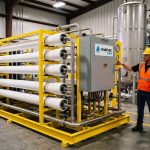
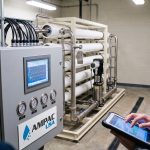
Addressing global water scarcity requires robust, scalable solutions like commercial and industrial reverse osmosis and advanced water purification systems. Technologies proven in diverse, demanding environments—from offshore oil rigs to municipalities—are essential to convert compromised water sources into safe, potable water, ensuring sustainable access for all.
Related Articles
- World Water Day: It’s Now or Never – Act Now for Environment
- Need for Portable Water Purification During COVID-19 Crisis
- Is Cape Town’s Water Crisis Really Over?
- World Water Day 2022 to Focus on Groundwater: Making the Invisible Visible
Conclusion
World Water Day exists because the math on global water access hasn’t caught up with population growth or climate stress, and cities like Cape Town and Manila have already shown what happens when supply runs short. The problem isn’t a lack of water on the planet, it’s getting clean water to the people who need it reliably and affordably. We’ve covered how groundwater fits into that picture in our post on World Water Day 2022’s groundwater focus. Contact our team at info@ampac1.com or (909) 548-4900 to talk about water treatment solutions for your community or facility.
AMPAC USA engineers custom water purification systems for commercial, industrial, and emergency applications — from 500 GPD to multi-million GPD. Trusted by municipalities, military, and industry worldwide.