
Models
-
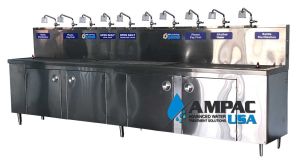
SS10-BWS
Water Store Bottle Filling Station with 10 Faucets
The AMPAC USA Water Store Bottle Filling Station with 10 Faucets, Model SS10-BWS, is engineered for high-volume water stores that need to move a large number of 5-gallon bottles through washing and filling quickly.
View specifications -
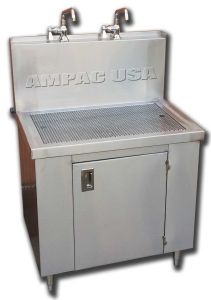
SS2-BWS
AMPAC USA Water Store Bottle Filling Station with 2 Faucets
The AMPAC USA Water Store Bottle Filling Station with 2 Faucets, Model SS2-BWS, gives smaller water stores and convenience stores a compact way to offer purified water to customers.
View specifications -
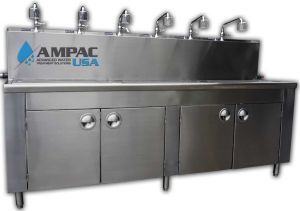
SS6-BWS
Water Store Bottle Filling Station with 6 Faucets
The AMPAC USA Water Store Bottle Filling Station with 6 Faucets, Model SS6-BWS, provides an efficient and hygienic solution for commercial water bottling operations.
View specifications -
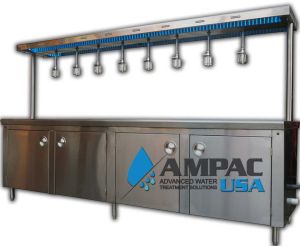
SS8i-BWS
Water Store Island Bottle Filling Station having 8 Faucets
The AMPAC USA Water Store Island Bottle Filling Station with 8 Faucets (model SS8i-BWS) streamlines the process of refilling large water bottles, primarily the popular 5-gallon size, for commercial water stores.
View specifications -
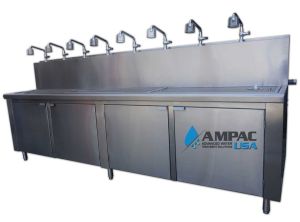
SS8-BWS-2
Water Store Bottle Filling Station with 8 Faucets
The AMPAC USA Water Store Bottle Filling Station with 8 Faucets (Model SS8-BWS) is built for high-volume 5-gallon bottle refilling in water stores and similar commercial operations.
View specifications -
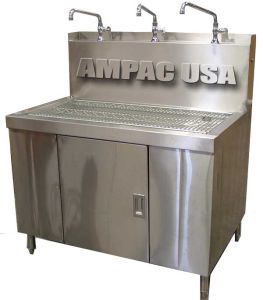
SS3-BWS
AMPAC USA Water Store Bottle Filling Station with 3 Faucets
The AMPAC USA Water Store Bottle Filling Station with 3 Faucets, model SS3-BWS, fills 5-gallon water bottles for commercial water store operations.
View specifications -
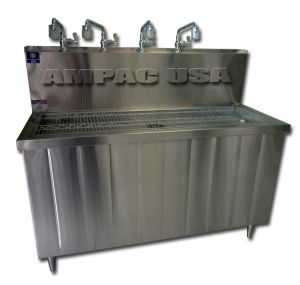
SS4-BWS
Water Bottle Filling Station with 4 Faucets for Water Stores
The AMPAC USA water bottle filling station with 4 faucets is a professional-grade water filling solution for water stores, offices, and commercial facilities.
View specifications
Need an output between two models, or a different feed water? Send us your numbers
About Commercial Water Refill & Filling Stations
Sizing a system? Send your flow rate and a feed-water analysis, and an AMPAC engineer will work out the configuration with you.
Bottle filling stations from AMPAC USA serves the purpose of filling bottles of every size in either water stores, large scale offices, educational institutions, and even manufacturing facilities. Specially made with stainless steel and a grid top, AMPAC offers these international grade stations in a range of 2 to 10 faucets. The stainless-steel make of these stations allows the equipment to be durable and sturdy for a long time.
All of our bottling stations come with pressure washers with a feed line connection to RO plants nearby to enable the user to sanitize the bottle before filling it with water. All the models of filling stations are manufactured for easy installation after delivery. Based on the requirements of the client, individual faucets can be designed to supply the particular quality of water like alkaline, ozone bottle rinse and purified water.
Every model is made with internationally accepted industrial standards and high-quality parts. These products are designed by some of the most experienced personnel at AMPAC to create a dependable product at a reasonable price. All the stations are NSF standard approved, made in the USA and come with a 24x7 after-sale customer support from the manufacturer.
AMPAC USA water filling stations are engineered for water stores, large offices, educational institutions, and manufacturing facilities. Our water fill stations and water refill stations are built from food-grade stainless steel and feature an anti-drip grid top to keep your floor dry. Available in 2 to 10 faucet configurations, each water filling station includes a booster pump system for consistent water pressure across all faucets.
Browse our full line of water filling stations and refilling station equipment below, or contact AMPAC USA to discuss a custom configuration for your water store or commercial application.
AMPAC USA water filling station and water fill station equipment provides a convenient, hygienic way for customers to refill personal water bottles with purified RO water. Our water refill station systems - including our popular 4-faucet model - are designed for high-traffic water filling stations in commercial water stores, gyms, offices, schools, and public facilities. Each refilling station connects directly to an AMPAC USA RO system to deliver consistently pure water at the point of fill. Contact AMPAC USA for complete water fill station and water filling stations pricing and specifications.
Water bottle refill stations from AMPAC USA are built for water stores that want to give customers a compelling reason to stop buying single-use plastic water bottles. Each refilling station connects to a dedicated RO system that produces purified water with measurably low TDS - the kind of water quality your customers can verify on the spot with a handheld TDS meter. Offering clean, great-tasting water at a lower per-gallon cost than bottled water gives water store customers a practical way to cut spending on plastic water bottles without sacrificing water quality. AMPAC's water bottle refill station configurations support everything from a basic two-faucet setup to a multi-station refilling station layout for high-volume water store operations. Contact us to find the right water refill station configuration for your location.
Frequently Asked Questions
What payment options do your bottle filling stations support?
Our self-service bottle filling stations support coin operation (quarters), bill acceptors (1s and 5s), credit and debit card readers, and proximity card or token systems for managed-access locations. Multi-payment stations are available for retail water stores wanting to maximize customer convenience. All card readers are EMV-compliant and PCI-DSS capable. Cashless-only configurations reduce vandalism risk in high-traffic locations.
What bottle sizes can customers fill at your stations?
Stations are designed to fill standard 1-gallon, 3-gallon, and 5-gallon bottles. Dispensing spouts and flow rates are calibrated for accurate metered fill by the gallon (typically 1.0-1.5 gallons per minute). Bottle sensor options are available to detect bottle placement before dispensing begins, preventing spills. Some models support 2.5-gallon bottles common in certain markets.
What water treatment is integrated into the filling station?
Stations connect to either a central RO system serving the entire water store or include a self-contained RO plus UV treatment train built into the cabinet. Central-system configurations allow a single large-capacity RO to serve multiple filling positions. Built-in treatment units include 5-stage RO with carbon and sediment pre-filtration, plus a UV sterilizer on the post-RO line. TDS display shows real-time permeate quality to customers.
Are filling stations NSF compliant and what standards apply?
Wetted components in our filling stations meet NSF/ANSI 61 (materials for potable water contact) and stainless steel dispensing spouts meet NSF/ANSI 58 for RO systems where applicable. NSF compliance documentation is available for permit applications. Some jurisdictions require health department approval for water retail operations. We provide a compliance package with each station to support your permit process.
How do I track sales and revenue from filling stations?
Stations include a digital transaction counter logging gallons dispensed and revenue collected by payment type. Data can be retrieved locally via USB or transmitted to a cloud management portal via WiFi or cellular modem. The portal provides daily sales reports, error alerts, and remote price adjustment. Multiple stations can be managed from a single dashboard, which is useful for owners operating several water store locations.
What maintenance does a self-service bottle filling station require?
Weekly tasks include sanitizing the dispensing spout and drip tray, checking coin and bill acceptor for jams, and verifying TDS display reading. Monthly tasks include sediment pre-filter replacement, RO membrane flush, and UV lamp intensity verification. Annual tasks include RO membrane performance test and UV lamp replacement. Stations with remote monitoring can alert the owner to filter change due dates and payment system faults automatically.